Anorexic BMI Calculator
Calculate Your BSA Instantly with the Body Surface Area Calculator
Table of Contents
- Introduction
- What Is an Anorexic BMI Calculator?
- Understanding Anorexia Nervosa and BMI
- The BMI Thinness Scale – Five Clinical Categories
- How Our Anorexic BMI Calculator Works Step by Step
- Understanding Every Result from the Anorexic BMI Calculator
- Calculated BMI – The Core Output
- Weight Status – Underweight vs. Normal
- Risk Category – Severe Risk and Low Risk Thresholds
- BMR Estimate – The Caloric Floor at Low BMI
- Nutrient Load – Deficient or Sufficient?
- Cardiac Strain and Medical Urgency Indicators
- The Five BMI Category Reference Table
- Physical and Medical Consequences of Severely Low BMI
- Psychological Dimensions of Anorexia and BMI
- Recovery and Weight Restoration – What the Numbers Mean
- When to Seek Immediate Medical Help
- Frequently Asked Questions (FAQs)
- Conclusion
Introduction
Body Mass Index is a number. But for the millions of individuals affected by anorexia nervosa and related eating disorders, that number carries profound medical, psychological, and life-threatening significance. A BMI below 17.5 is one of the diagnostic criteria for anorexia nervosa. A BMI below 16.0 signals severe thinness — a physiological state in which organ function, cardiac health, bone density, hormonal regulation, and cognitive capacity are all materially compromised. Understanding exactly where a BMI falls within the clinical thinness spectrum — and what the associated health implications are — is the purpose of the Anorexic BMI Calculator.
The Anorexic BMI Calculator is a specialised clinical reference tool designed to calculate BMI with a focus on the underweight and severely underweight range — providing not just a BMI number but a comprehensive set of health indicators that contextualise what that number means medically. Unlike a standard BMI tool that classifies weight into broad categories, the Anorexic BMI Calculator breaks down the underweight spectrum into five levels of thinness severity, estimates resting metabolic rate at low BMI, assesses cardiac strain, evaluates nutrient load adequacy, and flags medical urgency — giving individuals, caregivers, and health professionals a complete clinical picture from a single calculation.
This article is written with care and clinical accuracy. It is intended as an educational resource for individuals seeking to understand the medical implications of very low BMI, for caregivers and family members supporting someone with an eating disorder, for healthcare students and practitioners, and for anyone researching the relationship between anorexia nervosa and body weight. If you or someone you know is struggling with an eating disorder, please reach out to a qualified mental health or medical professional. The Anorexic BMI Calculator is an informational and clinical reference tool — not a diagnostic instrument and not a treatment guide.
What Is an Anorexic BMI Calculator?
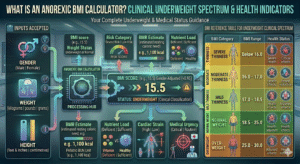
An Anorexic BMI Calculator is a specialised health assessment tool that calculates Body Mass Index with particular focus on the clinically significant underweight and severely underweight BMI range associated with anorexia nervosa and other restrictive eating disorders. While a standard BMI calculator classifies results into four broad categories (Underweight, Normal, Overweight, Obese), the Anorexic BMI Calculator provides greater granularity within the underweight spectrum — distinguishing between mild, moderate, and severe thinness — and adds clinical health indicators that contextualise the medical significance of the calculated BMI.
Our Anorexic BMI Calculator produces two output sections:
Clinical Results Panel — seven indicators:
- Calculated BMI (gender-adjusted)
- Weight Status (Underweight or Normal)
- Risk Category (Severe Risk or Low Risk)
- BMR Estimate (estimated resting caloric need)
- Nutrient Load (Deficient or Sufficient)
- Cardiac Strain (High or Low)
- Medical Urgency (Critical or Routine)
BMI Category Reference Table — five rows:
- Severe Thinness (BMI below 16.0)
- Moderate Thinness (BMI 16.0 to 17.0)
- Mild Thinness (BMI 17.0 to 18.5)
- Normal Weight (BMI 18.5 to 25.0)
- Overweight (BMI 25.0 to 30.0)
The Anorexic BMI Calculator supports weight in kilograms, pounds, or grams and height in feet and inches or centimetres — accommodating the full range of unit systems used globally. A gender adjustment factor (1.0 for males, 0.95 for females) is applied to reflect documented differences in body composition and BMI-health relationships between biological sexes.
Understanding Anorexia Nervosa and BMI
Anorexia nervosa is a serious, potentially life-threatening mental health condition characterised by persistent restriction of food intake, intense fear of gaining weight, and a distorted perception of body weight or shape. While anorexia nervosa is a psychiatric diagnosis — not a weight category — BMI plays a central role in both its clinical diagnosis and the severity classification used to guide treatment.
DSM-5 Diagnostic Criteria (Simplified): The Diagnostic and Statistical Manual of Mental Disorders, Fifth Edition (DSM-5) includes “significantly low body weight” as a core criterion for anorexia nervosa diagnosis, with a BMI below 17.5 serving as a widely used clinical threshold. The DSM-5 also includes severity specifiers based on BMI:
- Mild: BMI ≥ 17
- Moderate: BMI 16 to 16.99
- Severe: BMI 15 to 15.99
- Extreme: BMI < 15
The Anorexic BMI Calculator’s output categories align closely with these clinical severity specifiers, providing a reference framework that connects BMI values to clinical severity levels.
Critical Point — BMI Is Not the Whole Picture: Anorexia nervosa can be present at normal or even elevated BMI values. The psychological features — fear of weight gain, distorted body image, restrictive food behaviours — can exist and cause harm regardless of whether the person’s BMI falls in the underweight range. The Anorexic BMI Calculator assesses the metabolic and physiological consequences of low BMI — but eating disorder diagnosis and treatment must be conducted by qualified mental health and medical professionals.
The BMI Thinness Scale – Five Clinical Categories
The BMI category reference table in the Anorexic BMI Calculator provides five classifications — covering the clinically significant thinness spectrum through normal and into overweight:
Severe Thinness (BMI below 16.0): This is the most medically critical BMI range. At a BMI below 16, the body has typically exhausted peripheral fat stores and is progressively catabolising lean tissue — including muscle and organ mass — for energy. Cardiovascular complications (bradycardia, hypotension, arrhythmia, cardiac muscle atrophy), electrolyte imbalances (potentially fatal hyponatraemia, hypokalaemia), severe anaemia, immune suppression, and bone marrow failure are all documented at this BMI level. The Anorexic BMI Calculator flags Severe Risk and potentially Critical Medical Urgency at this range. Inpatient medical stabilisation is typically required before psychiatric treatment can begin.
Moderate Thinness (BMI 16.0 to 17.0): Significant physiological compromise exists at this BMI level — including menstrual disruption or cessation (amenorrhoea) in women, measurable bone density loss (osteopenia progressing toward osteoporosis), reduced cognitive function due to inadequate glucose availability, and impaired immune response. The Anorexic BMI Calculator’s Cardiac Strain indicator shifts toward High in this range. Specialised eating disorder treatment — combining medical monitoring, nutritional rehabilitation, and psychological intervention — is the standard of care.
Mild Thinness (BMI 17.0 to 18.5): The mild thinness category represents a BMI above the most severe clinical thresholds but still below the Normal range. Physiological impact at this BMI level is real but less acute than moderate or severe thinness — fatigue, cold sensitivity, reduced exercise capacity, and early-stage hormonal disruption are typical. The Anorexic BMI Calculator classifies this range as Underweight with Low Risk (relative to severe thinness) but still warrants professional evaluation if weight loss is ongoing or accompanied by restrictive eating behaviours.
Normal Weight (BMI 18.5 to 25.0): The internationally standardised healthy BMI range. The Anorexic BMI Calculator classifies results in this range as Normal weight status with Low Risk and Sufficient nutrient load — representing the target recovery range for individuals in eating disorder treatment working toward weight restoration.
Overweight (BMI 25.0 to 30.0): Included in the Anorexic BMI Calculator’s reference table for completeness and context — showing the full BMI spectrum from the perspective of the tool’s primary clinical focus. Individuals in eating disorder recovery may move through multiple BMI categories during weight restoration, and having the full reference table supports broader contextual understanding.
How Our Anorexic BMI Calculator Works Step by Step
Using the Anorexic BMI Calculator is a four-step process:
Step One – Select Gender: Choose Male (factor: 1.0) or Female (factor: 0.95). The gender factor in the Anorexic BMI Calculator applies a 5% downward adjustment to the BMI result for female inputs — reflecting documented differences in body composition between sexes and aligning the tool’s thresholds more closely with sex-specific clinical risk levels. Women physiologically carry a higher proportion of essential body fat than men at equivalent BMI values, making the adjustment clinically relevant.
Step Two – Enter Weight and Select Unit: Enter body weight and choose kilograms (kg), pounds (lbs), or grams (g). The Anorexic BMI Calculator converts pounds to kilograms (× 0.453592) and grams to kilograms (× 0.001) before calculation. The gram option accommodates contexts where very low body weights are recorded in grams — occasionally relevant in paediatric or severely underweight clinical documentation.
Step Three – Select Height Mode and Enter Height: Choose Feet & Inches or Centimetres. The Anorexic BMI Calculator converts feet and inches to centimetres internally [(feet × 12 + inches) × 2.54] before applying the BMI formula. Height accuracy is critical to BMI accuracy — a 5 cm height error shifts BMI by approximately 0.8 to 1.2 units at typical female weights, which is clinically significant in the underweight range where small BMI differences correspond to meaningfully different medical risk levels.
Step Four – Click Calculate: Instantly receive your complete clinical assessment — seven health indicators in the Results panel and a five-row BMI category reference table.
Understanding Every Result from the Anorexic BMI Calculator
The Anorexic BMI Calculator Clinical Results panel provides seven outputs, each with distinct medical significance:
Calculated BMI: The standard BMI formula result (weight kg ÷ height m²) multiplied by the gender factor. This is the primary numerical output of the Anorexic BMI Calculator — the value that is compared against the five clinical thinness categories and that determines all subsequent health indicator classifications.
Weight Status: Classified as Underweight (BMI below 17.5) or Normal (BMI 17.5 and above). The 17.5 threshold in the Anorexic BMI Calculator directly reflects the DSM-5-adjacent clinical threshold for anorexia nervosa diagnosis — making it the most clinically relevant cut-point for this specific tool, rather than the WHO standard underweight threshold of 18.5.
Risk Category: Classified as Severe Risk (BMI below 16.0) or Low Risk (BMI 16.0 and above). The Severe Risk classification in the Anorexic BMI Calculator corresponds to the WHO Severe Thinness category — the BMI range associated with acute medical complications requiring urgent intervention. Low Risk at or above BMI 16 does not mean no risk — it means the acute emergency risk threshold has not been crossed.
BMR Estimate: Calculated as BMI × 75 = estimated BMR in kcal/day. This approximation in the Anorexic BMI Calculator provides a rough estimate of resting caloric need at the current BMI — contextualising the energy deficit associated with very low body weight. At a BMI of 14, the estimated BMR is approximately 1,050 kcal/day; at a BMI of 17, approximately 1,275 kcal/day. These values are lower than healthy-weight BMR because lower body mass means less metabolically active tissue.
Nutrient Load: Classified as Deficient (BMI below 17) or Sufficient (BMI 17 and above). A Deficient nutrient load classification from the Anorexic BMI Calculator signals that at the current BMI, the body’s micronutrient and macronutrient reserves are likely below the threshold needed to sustain normal physiological function — a finding consistent with the malnutrition characteristic of severe restrictive eating.
Cardiac Strain: Classified as High (BMI below 16) or Low (BMI 16 and above). Cardiac strain is one of the most medically critical indicators in the Anorexic BMI Calculator because anorexia nervosa has the highest mortality rate of any psychiatric condition — and cardiac complications are the leading cause of anorexia-related deaths. At BMI below 16, cardiac muscle atrophy, bradycardia (slow heart rate), QT interval prolongation (arrhythmia risk), and hypotension are documented.
Medical Urgency: Classified as Critical (BMI below 15) or Routine (BMI 15 and above). A Critical medical urgency result from the Anorexic BMI Calculator indicates a BMI level consistent with extreme severity anorexia — a medical emergency requiring immediate inpatient assessment. At BMI below 15, the risk of potentially fatal cardiac arrhythmia, refeeding syndrome during recovery, organ failure, and mortality is substantially elevated.
Calculated BMI – The Core Output
The BMI formula at the heart of the Anorexic BMI Calculator:
BMI = Weight (kg) ÷ Height (m²)
For a person weighing 42 kg at 163 cm (1.63 m): BMI = 42 ÷ (1.63 × 1.63) = 42 ÷ 2.657 = 15.8 — Severe Thinness
The gender adjustment (0.95 for female) then modifies this to: 15.8 × 0.95 = 15.0 — still within Severe Thinness, with Medical Urgency flagged as Critical.
Why the gender adjustment matters clinically: Women have a higher percentage of essential body fat (12% to 15%) than men (3% to 5%) at equivalent BMI values — meaning a woman at BMI 16 is physiologically more depleted relative to her body’s natural fat requirements than a man at BMI 16. The 0.95 female gender factor in the Anorexic BMI Calculator partially captures this difference, producing a slightly lower final BMI value that more accurately reflects the woman’s physiological state relative to female-specific health norms.
Weight Status – Underweight vs. Normal
The 17.5 BMI threshold used in the Anorexic BMI Calculator for Underweight classification is clinically significant because it aligns with the diagnostic criterion used in ICD-10 (International Classification of Diseases) for anorexia nervosa:
ICD-10 states: “Body weight is maintained at least 15% below that expected (either lost or never achieved), or Quetelet’s BMI is 17.5 or less.”
This makes the Anorexic BMI Calculator’s Weight Status classification directly relevant to clinical eating disorder assessment in ICD-10 frameworks — using the same threshold that diagnostic guidelines reference. A result of Underweight (below 17.5) in the calculator corresponds to the weight criterion used in ICD-10 anorexia nervosa diagnosis (though formal diagnosis requires comprehensive clinical assessment beyond BMI alone).
The WHO’s standard underweight threshold of 18.5 (used in general BMI calculators) remains included in the reference table as the Mild Thinness boundary — recognising that BMI values between 17.5 and 18.5, while not meeting the ICD-10 anorexia criterion, still represent a clinically underweight status warranting attention.
Risk Category – Severe Risk and Low Risk Thresholds
The Risk Category in the Anorexic BMI Calculator uses a threshold of BMI 16.0 — the WHO boundary between Moderate Thinness and Severe Thinness — as the point at which acute medical risk escalates to Severe:
Below BMI 16.0 (Severe Risk): This threshold represents the point at which multiple physiological systems are simultaneously compromised — not just weight status, but organ function, cardiac health, electrolyte balance, bone density, immune capacity, and endocrine regulation. Medical literature consistently identifies BMI below 16 as the threshold requiring most urgent intervention in anorexia management protocols.
At or above BMI 16.0 (Low Risk — relative classification): “Low Risk” in the Anorexic BMI Calculator is relative, not absolute. A BMI of 16.5 is not “safe” — it still represents moderate thinness with significant physiological compromise. The Low Risk classification indicates that the most acute emergency threshold has not been crossed, not that medical concern is absent. Any result below 18.5 from the Anorexic BMI Calculator warrants professional evaluation.
BMR Estimate – The Caloric Floor at Low BMI
The BMR Estimate from the Anorexic BMI Calculator provides context for the profound caloric deprivation associated with very low BMI:
At BMI 14 (extreme thinness): BMR estimate ≈ 1,050 kcal/day At BMI 15 (severe thinness): BMR estimate ≈ 1,125 kcal/day At BMI 16 (moderate thinness): BMR estimate ≈ 1,200 kcal/day At BMI 17 (mild thinness): BMR estimate ≈ 1,275 kcal/day
These estimates illustrate an important clinical reality: at severely low BMI, the body’s resting caloric requirement has also fallen — because less body mass means less metabolically active tissue requiring maintenance energy. This downward metabolic adaptation, known as adaptive thermogenesis, is part of why weight restoration in anorexia recovery is carefully managed: the body must be gradually re-calibrated to higher caloric intake rather than immediately transitioning to normal caloric levels (which could cause refeeding syndrome).
Refeeding syndrome — a potentially fatal electrolyte disturbance caused by rapid reintroduction of calories after prolonged severe restriction — is one of the most dangerous complications of anorexia recovery. The Anorexic BMI Calculator’s BMR estimate helps contextualise why medically supervised, gradual caloric restoration is the required approach for BMI results in the Critical and Severe Risk categories.
Nutrient Load – Deficient or Sufficient?
The Nutrient Load indicator in the Anorexic BMI Calculator — classified as Deficient (below BMI 17) or Sufficient (BMI 17 and above) — reflects the relationship between very low body weight and micronutrient status:
At BMI below 17, the following deficiencies are commonly documented in clinical eating disorder populations:
Iron and Anaemia: Iron stores are depleted by caloric restriction, inadequate dietary iron, and accelerated red blood cell turnover in malnourished states. Anaemia affects cognitive function, physical energy, and immune capacity — creating a compounding cycle of physical and psychological impairment.
Electrolytes (Potassium, Sodium, Phosphate): Electrolyte imbalances at very low BMI — particularly hypokalaemia (low potassium) — directly affect cardiac rhythm. Hypokalaemia-induced arrhythmia is one of the primary cardiac death mechanisms in severe anorexia, and electrolyte monitoring is a core component of medical management.
Calcium and Vitamin D: Bone mineral density loss is near-universal in anorexia nervosa — with BMI below 17 associated with measurable bone loss that may not fully recover even with weight restoration. Osteopenia and osteoporosis at young ages represent one of the most significant long-term medical consequences of prolonged low-BMI states.
Zinc: Zinc deficiency is documented in anorexia nervosa and is associated with impaired taste perception, reduced appetite, immune suppression, and wound healing impairment — creating a self-reinforcing cycle that makes recovery more difficult.
B-Vitamins (particularly B12 and Folate): Critical for neurological function and red blood cell production. Deficiencies contribute to the cognitive impairment, depression, and fatigue commonly observed in anorexia nervosa.
Cardiac Strain and Medical Urgency Indicators
The two most clinically urgent indicators in the Anorexic BMI Calculator are Cardiac Strain and Medical Urgency — both directly linked to the mortality risk of severe anorexia nervosa:
Cardiac Strain (High — BMI below 16): Anorexia nervosa has the highest mortality rate of any psychiatric condition — estimated at 5% to 10% per decade for clinical populations — and cardiac complications account for the majority of deaths. At BMI below 16, the following cardiac changes are documented:
- Cardiac muscle atrophy (cardiac cachexia): The heart muscle itself wastes along with skeletal muscle, reducing pumping efficiency
- Bradycardia: Resting heart rate below 60 bpm (and often below 40 bpm in severe cases) — a protective adaptation that nonetheless represents abnormal cardiac function
- QT interval prolongation: Increased risk of ventricular tachycardia and sudden cardiac death
- Pericardial effusion: Fluid accumulation around the heart — a serious complication of severe malnutrition
- Orthostatic hypotension: Blood pressure drops dramatically when standing, causing syncope and increasing fall risk
Medical Urgency (Critical — BMI below 15): A Critical Medical Urgency result from the Anorexic BMI Calculator corresponds to extreme severity anorexia nervosa — the DSM-5’s most serious severity level. At this BMI range, inpatient hospitalisation is the standard of care in most clinical guidelines worldwide. The primary objectives of hospitalisation are:
- Medical stabilisation — cardiac monitoring, electrolyte correction, refeeding under medical supervision
- Prevention of refeeding syndrome — gradual caloric restoration with close biochemical monitoring
- Transition to specialist eating disorder treatment once medically stable
Physical and Medical Consequences of Severely Low BMI
The physical consequences of the BMI ranges captured by the Anorexic BMI Calculator span virtually every organ system:
Endocrine System: Prolonged severe caloric restriction suppresses the hypothalamic-pituitary-gonadal axis — causing amenorrhoea (loss of menstruation) in women and testosterone suppression in men. Growth hormone resistance develops despite elevated GH levels, while thyroid hormone activity decreases (sick euthyroid syndrome), slowing metabolism further. Cortisol rises, promoting muscle catabolism and bone loss.
Musculoskeletal System: Both skeletal muscle and bone suffer at low BMI. Bone mineral density loss can occur within months of severely restricted eating and may persist for years after weight restoration. Stress fractures, scoliosis progression, and premature osteoporosis are documented consequences.
Neurological System: Brain structure and function are directly affected by severe malnutrition. Grey matter volume decreases, white matter changes occur, and cognitive processing speed, memory, and executive function are impaired — all of which partially but not always fully reverse with weight restoration.
Gastrointestinal System: Gastric emptying slows dramatically, causing early satiety, bloating, and nausea — creating a physical barrier to eating that compounds the psychological resistance to food. Constipation, gastroparesis, and oesophageal complications are common at the low BMI levels captured by the Anorexic BMI Calculator.
Immune System: Lymphocyte count falls, neutrophil function is impaired, and wound healing is compromised. Individuals at severely low BMI are significantly more susceptible to infections and respond less effectively to treatment.
Psychological Dimensions of Anorexia and BMI
The Anorexic BMI Calculator measures the physical dimension of anorexia nervosa — but the psychological dimension is equally complex and equally important:
Distorted Body Image: One of the core features of anorexia nervosa is a profound disconnection between objective body weight (as captured by the Anorexic BMI Calculator result) and the individual’s subjective perception of their body. Even at BMI 13 or 14, many individuals with anorexia nervosa perceive themselves as overweight — a cognitive distortion driven by the neurobiological effects of malnutrition on brain function and by the psychological mechanisms of the illness.
The BMI-Recovery Disconnect: Weight restoration — moving the Anorexic BMI Calculator result from the Severe or Moderate Thinness category to the Normal range — is a necessary but not sufficient condition for eating disorder recovery. Psychological recovery — addressing the distorted cognitions, fear of weight gain, and underlying emotional drivers of the illness — typically requires months to years of specialised psychological treatment even after physical weight restoration is achieved.
Shame and Stigma: Many individuals avoid seeking help because of shame around their weight, fear of forced weight gain, or experiences of weight stigma from healthcare providers. The Anorexic BMI Calculator is designed to provide clinical information, not judgment. The numbers in the tool reflect medical risk levels — not worth, discipline, or personal failure.
Recovery and Weight Restoration – What the Numbers Mean
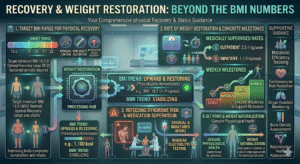
Weight restoration — moving the Anorexic BMI Calculator result from the thinness categories back toward the Normal range — is the foundational physical objective of anorexia nervosa treatment:
Target BMI Range for Recovery: Most eating disorder treatment programmes target a BMI of at least 18.5 — the WHO Normal weight lower boundary — as the minimum weight restoration goal. Many guidelines recommend targeting BMI 20 to 22 to achieve full physical recovery, as hormonal function, bone density restoration, and reproductive health recovery typically require BMI above 18.5 for sustained periods.
Rate of Weight Restoration: Medically supervised weight restoration typically targets 0.5 to 1 kg per week in outpatient settings and 1 to 1.5 kg per week in inpatient settings. Tracking weekly progress against the Anorexic BMI Calculator’s category thresholds (moving from Severe to Moderate to Mild Thinness to Normal) provides concrete milestones that can support motivation and clinical monitoring.
Refeeding Syndrome Risk: Any individual with a current Anorexic BMI Calculator result in the Severe Thinness or below category must have weight restoration supervised by a medical team — due to the risk of refeeding syndrome. The transition from extreme caloric restriction to increased caloric intake must be gradual and monitored with regular electrolyte testing.
Set Point and Weight Naturalisation: The body has a natural weight range (the “set point”) determined largely by genetics and long-term physiological homeostasis. After weight restoration, the body typically seeks to stabilise at a BMI appropriate for its individual set point — which may be higher than cultural or personal “ideals” but represents genuine physiological health.
When to Seek Immediate Medical Help
If the Anorexic BMI Calculator produces any of the following results, immediate medical assessment is required:
Critical Medical Urgency (BMI below 15): Seek emergency medical evaluation immediately. At this BMI level, the risk of sudden cardiac death, refeeding syndrome complications, and multi-organ failure is elevated to life-threatening levels. Do not attempt rapid home refeeding without medical supervision.
Severe Risk and High Cardiac Strain (BMI below 16): Contact a physician, eating disorder specialist, or hospital emergency department within hours. At this BMI level, cardiac monitoring, electrolyte assessment, and specialist eating disorder evaluation are medically indicated.
Any Anorexic BMI Calculator result showing Underweight + Deficient Nutrient Load: Schedule an appointment with a healthcare provider within days — sooner if there are additional symptoms such as fainting, chest pain, severe fatigue, cold intolerance, or amenorrhoea.
Important resources:
- NEDA (National Eating Disorders Association) Helpline: 1-800-931-2237
- Beat Eating Disorders (UK): 0808 801 0677
- Emergency services: Call 999 (UK) or 911 (US) for acute cardiac symptoms at very low BMI
Frequently Asked Questions (FAQs)
What is an Anorexic BMI Calculator? An Anorexic BMI Calculator is a specialised BMI assessment tool that focuses on the clinically significant underweight BMI range, providing detailed health indicators including risk category, cardiac strain, nutrient load, and medical urgency alongside the standard BMI value.
What BMI is considered anorexic? ICD-10 uses BMI 17.5 as a diagnostic weight threshold for anorexia nervosa. The Anorexic BMI Calculator classifies BMI below 17.5 as Underweight and uses WHO thinness categories (Mild: 17.0 to 18.5; Moderate: 16.0 to 17.0; Severe: below 16.0) to characterise severity.
Is the Anorexic BMI Calculator a diagnostic tool? No. The Anorexic BMI Calculator is a clinical reference and educational tool — not a diagnostic instrument. Anorexia nervosa diagnosis requires comprehensive psychiatric and medical assessment by qualified healthcare professionals. BMI is one component of diagnosis, not the sole criterion.
What does a Critical Medical Urgency result mean? A Critical Medical Urgency result from the Anorexic BMI Calculator means the calculated BMI is below 15 — corresponding to extreme severity anorexia nervosa — and that immediate medical evaluation and likely inpatient stabilisation is indicated.
Can someone have anorexia nervosa with a normal BMI? Yes. Anorexia nervosa can exist at normal or elevated BMI, particularly in individuals who have recently lost significant weight, in individuals with “atypical anorexia” (the DSM-5 recognises this presentation), or in individuals whose psychological symptoms predate significant weight loss. The Anorexic BMI Calculator assesses physical risk at the current BMI — it does not assess psychological features of eating disorders.
Why does the Anorexic BMI Calculator apply a gender factor? The 0.95 female gender factor reflects that women carry a higher proportion of essential body fat than men at equivalent BMI values. This adjustment produces a slightly lower BMI result for female inputs, more accurately reflecting the physiological depletion state relative to female-specific body composition norms.
What BMI is medically safe for recovery? Most eating disorder treatment guidelines target a minimum BMI of 18.5 for physical recovery, with many recommending 20 to 22 for full hormonal and bone density restoration. Use the Anorexic BMI Calculator to track progress through the thinness categories toward the Normal range (18.5 to 25.0) during weight restoration.
Is the Anorexic BMI Calculator safe to use? The Anorexic BMI Calculator is an informational and clinical reference tool designed to educate and inform. It does not promote, glorify, or encourage low-weight states — it contextualises the medical risks of very low BMI to support informed decision-making by individuals, families, and healthcare providers.
Conclusion
Anorexia nervosa is a disease that lives in the gap between what a person believes about their body and what their body actually needs to survive and thrive. The numbers produced by the Anorexic BMI Calculator — Calculated BMI, Risk Category, Cardiac Strain, Medical Urgency — are not judgments. They are clinical facts. They describe what is happening physiologically at any given body weight and height, and they provide the information needed to understand the severity of that state, the medical interventions it may require, and the physical goals that recovery must reach.
Our Anorexic BMI Calculator provides the most comprehensive free clinical BMI assessment available for the underweight range — applying gender adjustment for physiological accuracy, classifying results across five WHO thinness categories, estimating resting metabolic rate at low BMI, and flagging cardiac strain and medical urgency at the thresholds where immediate intervention is medically warranted.
If the Anorexic BMI Calculator produces a result that concerns you — for yourself or for someone you care about — please reach out to a healthcare provider, an eating disorder specialist, or a crisis helpline. The numbers in the calculator can initiate a conversation, provide clinical context, or validate a concern that deserves professional attention. Recovery from anorexia nervosa is possible. Weight restoration, psychological healing, and a genuinely healthy relationship with food and body are achievable with appropriate support — and the journey begins with understanding where you are now.
Use the Anorexic BMI Calculator as one tool in that understanding. And then reach out for the human support that the numbers alone cannot provide.