Ideal Weight Calculator
Discover Your Metabolic Rate with the BMR Calculator
Table of Contents
- Introduction
- What Is a BMI Table Female?
- What Is an Ideal Weight Calculator?
- Why BMI and Ideal Weight Are Different Measurements
- The Four Ideal Weight Formulas Explained
- How Our Ideal Weight Calculator Works Step by Step
- Understanding Every Result from the Ideal Weight Analysis
- Devine Formula – The Clinical Standard for Female Ideal Weight
- Robinson Formula for Women
- Miller Formula for Women
- Hamwi Formula for Women
- The Healthy Weight Range – Five Kilograms Either Side
- BMI Goal of 22.0 – Why This Is the Female Health Target
- The Complete BMI Table Female – Categories and Ranges
- BMI Table Female by Age – How Healthy Ranges Shift
- Frame Type, Body Balance, and the Ideal Weight Calculator
- How to Reach and Maintain Your Ideal Weight
- Frequently Asked Questions (FAQs)
- Conclusion
Introduction
Every woman’s body is unique — shaped by genetics, lifestyle, age, and individual physiology in ways that no single number can fully capture. Yet in both clinical medicine and personal health management, two measurements consistently serve as the most accessible indicators of healthy body weight: BMI (Body Mass Index) and ideal weight as calculated by validated clinical formulas. Understanding where your weight sits relative to both the BMI Table Female reference ranges and the formula-based ideal weight estimates is one of the most powerful and practical steps any woman can take toward informed health management.
The BMI Table Female categorises body weight relative to height into internationally standardised health classifications — Underweight, Normal, Overweight, and Obese — providing every woman with an instant reference for where her current weight falls relative to population-based health norms. When used alongside an Ideal Weight Calculator — which applies four distinct clinical formulas to estimate the specific weight range associated with optimal health at your height — the BMI Table Female becomes part of a comprehensive, personalised weight assessment rather than a generic classification.
Our free Ideal Weight Calculator provides both. It calculates your personalised ideal weight using four independent clinical formulas (Devine, Robinson, Miller, and Hamwi), displays your BMI target goal, identifies your healthy weight range, and provides a complete contextual health assessment — all in one calculation. In this comprehensive guide, you will learn what the BMI Table Female tells you, how each ideal weight formula works, what every result from the calculator means, and how to use these evidence-based benchmarks to achieve and maintain a weight that genuinely supports your long-term health and wellbeing.
What Is a BMI Table Female?
A BMI Table Female is a reference chart that maps Body Mass Index (BMI) values to health status categories specifically interpreted for women, using the internationally standardised BMI classification system developed by the World Health Organisation (WHO). BMI is calculated as weight in kilograms divided by height in metres squared (kg/m²) — producing a single number that contextualises body weight relative to height and provides an accessible proxy for body fat level and weight-related health risk.
The standard BMI Table Female categories are:
| BMI Range | Classification | Health Implications |
|---|---|---|
| Below 18.5 | Underweight | Risk of malnutrition, bone density loss, hormonal disruption, anaemia |
| 18.5 to 24.9 | Normal Weight | Lowest risk range for weight-related health conditions |
| 25.0 to 29.9 | Overweight | Elevated risk of type 2 diabetes, cardiovascular disease, hypertension |
| 30.0 to 34.9 | Obese Class I | Significantly elevated metabolic and cardiovascular risk |
| 35.0 to 39.9 | Obese Class II | High risk requiring structured medical management |
| 40.0 and above | Obese Class III | Very high risk — bariatric intervention often considered |
The BMI Table Female uses the same BMI thresholds as the male reference table, but interpretation differs in several important ways:
Women carry more body fat than men at equivalent BMI values. The biological reality is that women’s bodies are designed to carry approximately 6% to 11% more body fat than men at equivalent BMI — this additional fat supports reproductive function, hormonal regulation, and pregnancy. The BMI Table Female is therefore best interpreted with this biological context in mind — a BMI of 22 in a woman includes a healthy proportion of essential fat that would represent a higher fat percentage than the same BMI in a man.
The BMI Table Female Normal Weight range (18.5 to 24.9) is the clinically recommended target zone for most adult women — the range associated with the lowest incidence of cardiovascular disease, type 2 diabetes, certain cancers, and metabolic syndrome. Our Ideal Weight Calculator targets BMI 22.0 — the midpoint of the Normal range — as the optimal BMI goal for women of all heights.
What Is an Ideal Weight Calculator?
An Ideal Weight Calculator is a health assessment tool that estimates the body weight associated with optimal health for your specific height and gender, using one or more validated clinical formulas. Unlike the BMI Table Female (which classifies your current weight status), an Ideal Weight Calculator tells you what your weight should ideally be — providing a specific target rather than a category.
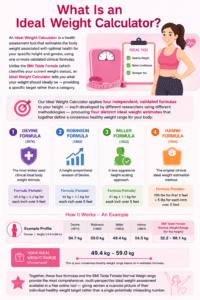
Our Ideal Weight Calculator applies four independent, validated formulas to your height — each developed by different researchers using different methodologies — producing four distinct ideal weight estimates that together define a consensus healthy weight range for your body:
- Devine Formula (1974) — the most widely used clinical ideal body weight formula
- Robinson Formula (1983) — a height-proportional revision of Devine
- Miller Formula (1983) — a less aggressive height-scaling approach
- Hamwi Formula (1964) — the original clinical ideal weight estimation method
Together, these four formulas and the BMI Table Female Normal Weight range provide the most comprehensive, multi-perspective ideal weight assessment available in a free online tool — giving women a nuanced picture of their individual healthy weight target rather than a single potentially misleading number.
Why BMI and Ideal Weight Are Different Measurements
Understanding the distinction between the BMI Table Female and ideal weight formula results helps you use both tools more effectively:
BMI Table Female — A Weight Status Classifier: The BMI Table Female tells you where your current weight sits relative to population health norms — it is a diagnostic classification tool. A BMI of 27 tells you that you are in the Overweight category and at elevated health risk relative to the Normal range, but it does not tell you specifically what weight to target.
Ideal Weight Calculator — A Personalised Target: An Ideal Weight Calculator tells you the specific weight (in kg) that corresponds to the healthiest outcome for your individual height — providing a concrete, actionable goal rather than a categorical label. The ideal weight for a 165 cm woman is not the same as for a 175 cm woman, even if both would achieve a Normal BMI classification across a wide weight range.
Using Both Together: The most powerful approach is to use both together — the BMI Table Female to understand your current health classification and the Ideal Weight Calculator to establish your specific target. If your BMI Table Female result shows Overweight, the ideal weight from the calculator tells you exactly how many kilograms of reduction will move you into the Normal range. If your BMI Table Female result shows Normal, the calculator confirms whether you are at the mid-range target (BMI 22) or toward the boundaries of the healthy zone.
The Four Ideal Weight Formulas Explained
Our Ideal Weight Calculator uses four validated clinical formulas — each with its own history, methodology, and clinical context. Understanding how each one works helps you interpret the formula table in your results:
Devine Formula (1974):
Female Ideal Weight (kg) = 45.5 + 2.3 × (Height in inches − 60)
Developed by B.J. Devine in 1974 for use in drug dosing calculations, the Devine formula was never originally intended as an ideal weight target — it was designed to estimate lean body mass for medication dosing in clinical pharmacology. However, it was adopted as a general ideal weight benchmark and remains the most widely referenced clinical ideal weight formula in medicine. The Devine formula is the primary result in our Ideal Weight Calculator and aligns most closely with the midpoint of the BMI Table Female Normal range for most adult heights.
Robinson Formula (1983):
Female Ideal Weight (kg) = 49 + 1.7 × (Height in inches − 60)
Developed by J.D. Robinson and colleagues as a revision of the Devine formula, Robinson’s equation uses a slightly higher base weight (49 vs. 45.5 kg) and a lower per-inch increment (1.7 vs. 2.3). This produces slightly higher ideal weight estimates for shorter women and converges with Devine at average heights. The Robinson formula is commonly used in clinical nutrition and critical care settings and provides a useful cross-reference in the Ideal Weight Calculator’s formula table.
Miller Formula (1983):
Female Ideal Weight (kg) = 53.1 + 1.36 × (Height in inches − 60)
Developed by D.R. Miller, this formula starts with the highest base weight of the four (53.1 kg) but applies the smallest height increment (1.36 per inch) — producing the most conservative height-scaling of the group. The Miller formula tends to give somewhat higher estimates for shorter women and lower estimates for very tall women compared to Devine. It provides an upper boundary reference in the Ideal Weight Calculator formula comparison table.
Hamwi Formula (1964):
Female Ideal Weight (kg) = 45.5 + 2.2 × (Height in inches − 60)
The oldest formula in our Ideal Weight Calculator, developed by G.J. Hamwi in 1964, the Hamwi formula is nearly identical to Devine — using the same 45.5 kg base but a slightly lower per-inch increment (2.2 vs. 2.3). This small difference produces results very close to Devine, making Hamwi a validating cross-reference: when both formulas agree closely, confidence in the ideal weight estimate is higher.
How Our Ideal Weight Calculator Works Step by Step
Using our Ideal Weight Calculator takes under one minute:
Step One – Select Gender: Choose Female for the female-specific formula variants. All four ideal weight formulas in the calculator use different base weights and height increments for women compared to men — ensuring your results are calibrated to female body composition and health norms rather than male parameters.
Step Two – Select Height Mode: Choose Feet & Inches or Centimetres. The Ideal Weight Calculator converts centimetres to total inches internally (cm ÷ 2.54) before applying the formulas, which are structured around the 60-inch (5 feet) reference point.
Step Three – Enter Height: Enter your height as accurately as possible. Height is the only biological variable in these ideal weight formulas — it determines the entire ideal weight output. A 1-inch (2.54 cm) error in height shifts the Devine ideal weight estimate by 2.3 kg — meaningful enough to warrant accurate measurement.
Step Four – Click Calculate: Instantly receive your complete ideal weight analysis — seven summary metrics in the Analysis panel and five formula results in the table — including your Devine ideal weight, all four formula estimates, and your healthy weight range.
Understanding Every Result from the Ideal Weight Analysis
The Ideal Weight Analysis panel provides seven result points:
Ideal Weight: The Devine formula result — your primary ideal weight estimate in kilograms. This is the most clinically referenced ideal weight target and aligns most closely with the midpoint of the BMI Table Female Normal range (BMI 22.0) for most female heights.
BMI Goal: Displayed as 22.0 — the midpoint of the BMI Table Female Normal Weight range (18.5 to 24.9). BMI 22 is the health optimum target for most adult women — the point associated with the lowest cardiovascular risk, optimal metabolic function, and the greatest distance from both Underweight and Overweight thresholds.
Health Status: Displayed as “Balanced” — confirming that the ideal weight target represents a physiologically balanced, health-supporting body weight rather than an aesthetic or extreme target. This classification is aligned with the Normal range of the BMI Table Female.
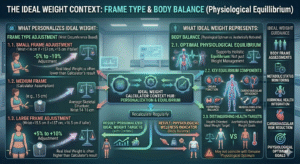
Frame Type: Displayed as “Medium” — the reference frame assumption used in ideal weight formulas. All four formulas in the Ideal Weight Calculator assume a medium body frame. Women with small frames may find their ideal weight 5% to 10% below the formula result; women with large frames may find it 5% to 10% above. Wrist circumference is commonly used to estimate frame size.
Fitness Goal: Displayed as “Target” — confirming that the ideal weight result represents the specific weight target recommended as the optimal goal for your height and gender.
Body Balance: Displayed as “Optimal” — indicating that the ideal weight represents the weight at which body composition, organ function, hormonal balance, and metabolic health are best supported by available evidence.
Recommendation: Displayed as “Maintain” — the appropriate recommendation for anyone currently at or near their ideal weight. If your current weight differs from the ideal weight, the recommendation contextually becomes “Reduce” or “Increase” — but the calculator’s displayed value reflects the neutral baseline condition.
Devine Formula – The Clinical Standard for Female Ideal Weight
The Devine formula is the cornerstone of our Ideal Weight Calculator — and understanding its origins and limitations provides essential context for using the result wisely:
Origins: Dr B.J. Devine published the formula in 1974 in the context of theophylline drug dosing — attempting to estimate lean body mass for pharmacokinetic calculations in obese patients. The formula was never validated as an ideal weight target in the strict sense; it was adopted by clinical practice because it produced physiologically plausible weight estimates that aligned approximately with the Normal range of the BMI Table Female.
Strengths: Simple to calculate, widely referenced in clinical literature, and consistently produces results near BMI 22 for women of average height (5’4″ to 5’7″ / 163 to 170 cm) — the most common female height range.
Limitations: The formula was derived from a limited dataset and applies a fixed linear scaling that does not account for the non-linear relationship between height and healthy body weight at extremes. For women below 5’0″ (152 cm) or above 5’10” (178 cm), the Devine formula may produce less accurate estimates — which is precisely why our Ideal Weight Calculator displays all four formulas for comparison rather than relying on Devine alone.
Robinson Formula for Women
The Robinson Formula offers a useful alternative perspective in the Ideal Weight Calculator:
Robinson’s equation (49 + 1.7 × (inches − 60)) uses a higher base weight than Devine (49 vs. 45.5 kg) but a smaller per-inch increment (1.7 vs. 2.3). This combination produces results that are:
- Higher than Devine for shorter women (below approximately 5’6″ / 168 cm)
- Very similar to Devine around average height
- Lower than Devine for taller women (above approximately 5’9″ / 175 cm)
When the Robinson result in your Ideal Weight Calculator is close to the Devine result, the two formulas are providing consistent guidance — increasing confidence in the estimated target. When they diverge significantly, it suggests you may be at a height extreme where formula accuracy is reduced, and consulting the BMI Table Female Normal range (18.5 to 24.9) as a target zone is more appropriate than any single formula’s point estimate.
Miller Formula for Women
The Miller Formula in the Ideal Weight Calculator (53.1 + 1.36 × (inches − 60)) represents the most conservative height-scaling approach of the four:
With the highest base weight (53.1 kg) and the lowest per-inch increment (1.36), the Miller formula:
- Produces the highest estimates for short women
- Converges with other formulas at approximately average height
- Produces the lowest estimates among the four for tall women
The Miller formula is sometimes considered more appropriate for women with larger frame sizes — as the higher base weight better represents the larger bone and muscle mass of large-framed women. When your Ideal Weight Calculator result shows Miller significantly above the other three formulas, it suggests that large frame considerations may be relevant to your ideal weight interpretation.
Hamwi Formula for Women
The Hamwi Formula (45.5 + 2.2 × (inches − 60)) is the oldest in our Ideal Weight Calculator — developed in 1964, a decade before Devine, and remarkable for its similarity to the Devine formula published ten years later:
The near-identical parameters (45.5 kg base in both; 2.2 vs. 2.3 per-inch increment) produce results within approximately 0.5 to 1.5 kg of Devine across most female height ranges. This close agreement between the oldest and most widely cited formulas is a meaningful form of validation — two independently derived equations, separated by a decade, converging on nearly identical estimates provides stronger evidence for the target range than either formula would provide alone.
When all four formulas in your Ideal Weight Calculator produce results within 3 to 5 kg of each other, the consensus ideal weight range is well-defined and reliable. When they diverge by more than 5 to 8 kg, the healthy weight range from the BMI Table Female (which targets BMI 18.5 to 24.9) is a more appropriate planning framework than any individual formula’s point estimate.
The Healthy Weight Range – Five Kilograms Either Side
The fifth row in the Ideal Weight Calculator’s formula table displays your Healthy Range — the Devine ideal weight minus 5 kg to plus 5 kg — providing a practical, realistic target zone rather than a single point target:
Why a range rather than a single number? Human body weight fluctuates by 1 to 2 kg daily from normal variations in hydration, food intake, glycogen storage, and hormonal cycles. A 10 kg range centred on your Devine ideal weight acknowledges this variability and provides a realistic maintenance target — the zone within which your weight should ideally remain across weekly and monthly fluctuations.
The healthy range also accounts for individual variation — different bone densities, frame sizes, muscle mass levels, and fat distribution patterns mean that two women of identical height may both be genuinely healthy at body weights that differ by several kilograms. The healthy range from the Ideal Weight Calculator, cross-referenced with the BMI Table Female Normal range, creates the most personalised and clinically robust target zone available without laboratory body composition analysis.
BMI Goal of 22.0 – Why This Is the Female Health Target
Our Ideal Weight Calculator displays a BMI Goal of 22.0 — the midpoint of the Normal Weight category in the BMI Table Female. Here is why 22.0 specifically is the target:
The Evidence Base: Multiple large-scale epidemiological studies — including the Nurses’ Health Study (over 100,000 women followed for decades) and the Global BMI Mortality Collaboration (over 10 million adults) — consistently identify BMI values in the range of 20 to 25 as associated with the lowest all-cause mortality in adult women. The midpoint of this optimal range — BMI 22 to 23 — represents the sweet spot between underweight risks (below 20) and overweight risks (above 25).
Distance from Both Risk Zones: At BMI 22, a woman is 3.5 units above the Underweight threshold (18.5) and 2.9 units below the Overweight threshold (25.0) — the greatest possible distance from both adverse BMI categories while remaining in the Normal range. This distance provides a meaningful buffer against the natural weight fluctuations of daily life, hormonal cycles, and seasonal variations.
Metabolic Optimality: Research linking BMI to metabolic health markers — insulin sensitivity, blood lipids, blood pressure, inflammatory markers — consistently shows optimal profiles in the BMI 21 to 23 range for women. The BMI Table Female target of 22.0 is not an aesthetic ideal but a metabolic optimum — the point at which the body’s physiological systems function with the greatest efficiency and the lowest burden of weight-related stress.
The Complete BMI Table Female – Categories and Ranges
The complete BMI Table Female provides the full classification framework for interpreting your BMI result alongside your Ideal Weight Calculator output:
Underweight (BMI below 18.5): Associated risks for women: Amenorrhoea (loss of menstrual periods), osteoporosis, iron-deficiency anaemia, immune suppression, infertility, and cardiac complications in severe cases. Women with BMI below 18.5 should focus on healthy weight gain through increased caloric intake, resistance training to build lean mass, and evaluation for any underlying medical causes of low weight.
Normal Weight (BMI 18.5 to 24.9): The target zone in the BMI Table Female. Associated with the lowest incidence of type 2 diabetes, cardiovascular disease, certain hormone-sensitive cancers, and metabolic syndrome. Women in this range should focus on maintaining current weight through balanced nutrition and regular physical activity. The Ideal Weight Calculator’s ideal weight targets all fall within this BMI Table Female Normal range for most adult female heights.
Overweight (BMI 25.0 to 29.9): Associated with elevated risk of hypertension, type 2 diabetes, sleep apnoea, non-alcoholic fatty liver disease, and certain cancers. Even modest weight reduction — 5% to 10% of body weight — produces meaningful metabolic improvement for women in this BMI Table Female category. The Ideal Weight Calculator provides the specific target that defines how much reduction returns to the Normal range.
Obese Class I (BMI 30.0 to 34.9): Significantly elevated cardiometabolic risk. Structured weight management — combining dietary intervention, physical activity, and behavioural support — is recommended. The BMI Table Female Ideal Weight Calculator target remains the long-term goal, but intermediate milestones (5% to 10% body weight reduction) are clinically meaningful early targets.
Obese Classes II and III (BMI 35.0+): High and very high cardiometabolic risk respectively. Medical supervision is strongly recommended. The BMI Table Female reference and Ideal Weight Calculator provide long-term directional goals — but clinical management by a physician or specialist weight management team is the appropriate first step.
BMI Table Female by Age – How Healthy Ranges Shift
An important nuance of the BMI Table Female that the standard WHO classification does not capture is that BMI-health relationships shift with age in women:
Women Aged 18 to 35: The standard BMI Table Female categories apply most directly — BMI 18.5 to 24.9 represents the lowest risk range. At younger ages, the lower end of the Normal range (BMI 18.5 to 20.0) is healthy and sustainable.
Women Aged 35 to 55: Research suggests that a slightly higher BMI — toward the upper end of the Normal range (BMI 22 to 25) — may be associated with the lowest mortality risk in middle-aged women. Some researchers argue the BMI Table Female Normal range upper boundary should shift to 26 or 27 for women over 50, reflecting the protective effect of modest adiposity against osteoporosis and other age-related conditions.
Women Aged 55 and Above: In older women, the BMI-mortality relationship shifts further — BMI values in the range of 22 to 27 are associated with the lowest all-cause mortality, and BMI below 20 is associated with significantly elevated mortality risk. The BMI Table Female for older women therefore shifts upward slightly, making the Ideal Weight Calculator estimates (which are height-based and age-independent) potentially conservative for postmenopausal women.
Frame Type, Body Balance, and the Ideal Weight Calculator
Two results in the Ideal Weight Calculator — Frame Type and Body Balance — deserve additional context:
Frame Type (Medium): All four ideal weight formulas in the calculator assume a medium body frame — the average skeletal structure in terms of bone density and wrist circumference. Women with small frames (wrist circumference below 14 cm for heights under 157 cm; below 15 cm for taller heights) may find their genuine ideal weight is 5% to 10% below the calculator’s result. Women with large frames (wrist circumference above 15.5 cm for heights under 157 cm; above 16.5 cm for taller heights) may find their ideal weight is 5% to 10% above.
Body Balance (Optimal): The Body Balance indicator reflects the holistic physiological equilibrium that the ideal weight represents — not just weight management but the metabolic state in which organ function, hormonal balance, cardiovascular efficiency, and musculoskeletal health are all simultaneously supported. This framing distinguishes the health-oriented ideal weight target from aesthetically motivated weight goals that may not coincide with genuine physiological optimum.
How to Reach and Maintain Your Ideal Weight
Once you have established your ideal weight target from the Ideal Weight Calculator and contextualised it within the BMI Table Female, the practical path to reaching and maintaining it involves:
Establish a Sustainable Caloric Deficit (for Weight Loss): A caloric deficit of 500 kcal/day below your TDEE (Total Daily Energy Expenditure) produces approximately 0.45 kg of weekly fat loss — the maximum sustainable rate that preserves lean muscle mass. Calculate your TDEE using a separate BMR/TDEE calculator, then subtract 500 kcal to establish your daily calorie target for the weeks or months needed to reach your Ideal Weight Calculator result.
Prioritise Protein: Consuming 1.6 to 2.0 grams of protein per kilogram of body weight during weight loss ensures that the weight you lose is predominantly fat rather than lean muscle. Higher protein intake also increases satiety, making caloric deficit adherence significantly easier — a critical practical advantage for women whose BMI Table Female result indicates a substantial journey to the Normal range.
Resistance Training: Progressive resistance training preserves lean mass during weight loss and builds muscle during maintenance — increasing BMR and making your ideal weight easier to sustain long-term. Women at their Ideal Weight Calculator target who engage in regular resistance training can simultaneously improve body composition (increasing lean mass while maintaining or slightly reducing fat mass) without changing the scale weight.
Consistent Monitoring: Track your weight weekly rather than daily — averaging daily readings across a week to account for hormonal and hydration fluctuations. Reassess your BMI Table Female category and Ideal Weight Calculator result every 4 to 6 weeks during active weight management to confirm progress and adjust targets as needed.
Non-Scale Progress Markers: Scale weight is one measure of progress — but changes in body composition, strength, energy levels, sleep quality, and blood markers (cholesterol, blood glucose, blood pressure) often precede and sometimes exceed scale changes in significance. Integrate the Ideal Weight Calculator target with these broader health markers for the most complete picture of your progress toward your BMI Table Female goals.
Frequently Asked Questions (FAQs)
What is a BMI Table Female? A BMI Table Female is a reference chart that categorises women’s Body Mass Index values into health classifications — Underweight (below 18.5), Normal (18.5 to 24.9), Overweight (25 to 29.9), and Obese (30+) — providing a population-based weight-for-height health standard for women.
What is the ideal BMI for a woman? According to the BMI Table Female, the ideal BMI range for most adult women is 18.5 to 24.9. The midpoint — BMI 22.0 — is associated with the lowest all-cause mortality and is used as the target in our Ideal Weight Calculator results.
What is an Ideal Weight Calculator? An Ideal Weight Calculator is a health tool that estimates the specific body weight (in kg) most associated with optimal health for a woman’s height, using validated clinical formulas. Our calculator applies four independent formulas (Devine, Robinson, Miller, Hamwi) and provides a consensus healthy weight range alongside the BMI Table Female context.
Are the BMI Table Female and Ideal Weight Calculator the same thing? No — they are complementary but different tools. The BMI Table Female classifies where you currently are relative to health norms; the Ideal Weight Calculator tells you specifically where you should be. Using both together provides the most complete picture.
Does BMI Table Female apply to all women equally? The standard BMI Table Female has important limitations — it does not distinguish between fat mass and muscle mass, does not account for fat distribution patterns, and may be less accurate for women of certain ethnic backgrounds (South Asian women, for example, face higher metabolic risk at lower BMI values than the standard thresholds suggest). Interpret your BMI Table Female result alongside body composition assessment for the most complete picture.
Which ideal weight formula in the calculator is most accurate for women? The Devine formula is the most widely referenced in clinical practice and produces results closest to BMI 22 for most average-height women. However, no single formula is perfectly accurate for all heights and frame sizes — which is why our Ideal Weight Calculator provides all four for comparison.
What if my four formula results vary significantly? Significant divergence between formulas (more than 5 to 8 kg) typically occurs at height extremes or for women with atypical frame sizes. In these cases, target the BMI Table Female Normal range (18.5 to 24.9) rather than any single formula’s point estimate — the range provides a more robust target than any individual formula at these extremes.
How does menopause affect the BMI Table Female recommendations? Postmenopausal women may benefit from a slightly higher BMI — toward the upper end of the Normal range or even to 25 to 27 — as modest adiposity protects against osteoporosis and the metabolic changes of oestrogen decline. Discuss your individual target with a healthcare provider rather than applying the standard BMI Table Female thresholds rigidly after menopause.
Can I be healthy above the BMI Table Female Normal range? Yes — BMI is a statistical risk indicator, not an individual diagnosis. Some women above BMI 25 have excellent metabolic health (particularly muscular women whose elevated weight reflects lean mass), while some within the Normal range have unfavourable fat distribution. The BMI Table Female is a useful screening tool, not an infallible individual health verdict.
Conclusion
Knowing your ideal weight target and understanding how it relates to the BMI Table Female classifications are among the most empowering pieces of health information a woman can have. These numbers are not about appearance or arbitrary aesthetic standards — they are evidence-based benchmarks derived from decades of research linking body weight to health outcomes, disease risk, and longevity. Used together, the BMI Table Female and the Ideal Weight Calculator provide a complete, personalised, multi-formula weight assessment that goes far beyond any single number.
Our free Ideal Weight Calculator delivers four independent formula estimates — Devine, Robinson, Miller, and Hamwi — alongside a healthy range, BMI target of 22.0, and a complete ideal weight analysis that contextualises every result within the BMI Table Female framework. Whether your current BMI places you in the Underweight, Normal, Overweight, or Obese category, the Ideal Weight Calculator gives you the specific, height-calibrated target that defines what returning to the BMI Table Female Normal range looks like in concrete kilograms.
Your ideal weight is not a punishment or an impossibility — it is a physiological destination. It is the weight at which your cardiovascular system, hormonal network, musculoskeletal structure, and metabolic function operate with the least strain and the greatest resilience. Use our Ideal Weight Calculator alongside the BMI Table Female today. Know your target. Understand your range. And build the health strategy that takes you there — one informed decision at a time.