GFR Calculator
Find Your Most Fertile Days with the Conception Calculator
Table of Contents
- Introduction
- What Is a GFR Calculator?
- Why Glomerular Filtration Rate Is the Gold Standard for Kidney Function
- How Our GFR Calculator Works – Adults and Children
- The Cockcroft-Gault Formula in the Adult GFR Calculator
- The Schwartz Formula in the Pediatric GFR Calculator
- Creatinine – The Core Biomarker of the GFR Calculator
- Understanding All Eight Clinical Results from the GFR Calculator
- CKD Staging Table – Reading Your GFR Calculator Progress Chart
- The Pediatric GFR Calculator – How Children’s Results Differ
- Cystatin C and BUN in the Pediatric GFR Calculator
- Body Surface Area and Renal Load in the Adult GFR Calculator
- The Five Stages of Chronic Kidney Disease
- Risk Factors for Declining GFR and Kidney Disease
- How to Protect and Improve Your GFR Over Time
- When to See a Nephrologist Based on Your GFR Calculator Results
- Frequently Asked Questions (FAQs)
- Conclusion
Introduction
Your kidneys are among the most sophisticated filtration systems in the natural world. Every single minute, these two fist-sized organs filter approximately 125 millilitres of blood — processing your entire blood supply roughly 40 times per day, extracting waste products, regulating fluid balance, controlling blood pressure, and maintaining the precise chemical equilibrium that every organ in your body depends on. The efficiency of this filtration process — measured as Glomerular Filtration Rate — is the single most important indicator of kidney health available in clinical medicine. And the tool that makes this measurement accessible without a laboratory is the GFR Calculator.
A GFR Calculator estimates your glomerular filtration rate from readily available blood test data — primarily serum creatinine — combined with your age, gender, weight, and height. The result is a number measured in millilitres per minute per 1.73m² of body surface area that tells you, with remarkable clinical accuracy, how well your kidneys are filtering your blood. This number is the foundation of chronic kidney disease (CKD) staging, the benchmark against which all kidney function interventions are measured, and the early warning system that can detect declining kidney health years before symptoms appear.
Our free GFR Calculator provides two complete tools in one — an Adult GFR Calculator using the validated Cockcroft-Gault formula, and a Pediatric GFR Calculator using the Schwartz formula designed specifically for children’s renal physiology. Each calculator produces eight clinical result points and a five-row reference table — giving you, your family, or your patients a comprehensive kidney function assessment from a single set of inputs. In this complete guide, you will learn exactly what the GFR Calculator measures, how it works, what every result means, how CKD stages correspond to eGFR values, and what you can do to protect and preserve your kidney function across a lifetime.
What Is a GFR Calculator?
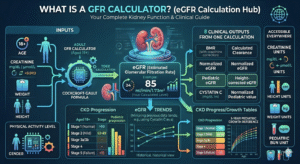
A GFR Calculator is a clinical assessment tool that estimates the Glomerular Filtration Rate (GFR) — the volume of blood filtered by the glomeruli (the tiny filtering units of the kidneys) per unit of time — using a mathematical formula applied to blood test results and personal biometric data. Because direct measurement of true GFR requires complex laboratory procedures (such as inulin clearance testing or radioisotope methods), clinical practice uses estimated GFR (eGFR) derived from validated formulas — making the GFR Calculator an essential tool in both clinical and patient-facing contexts.
Our GFR Calculator offers two separate calculation modules:
Adult GFR Calculator — for patients aged 18 and above:
- Inputs: Age, creatinine (mg/dL or µmol/L), weight (kg), height (cm), gender
- Formula: Cockcroft-Gault
- Outputs: 8 clinical results + 5-stage CKD progress table
Pediatric GFR Calculator — for patients under 18:
- Inputs: Age, creatinine (mg/dL or µmol/L), height (cm), BUN (mg/dL), Cystatin C
- Formula: Schwartz (Bedside CKiD equation)
- Outputs: 8 clinical results + 5-year growth reference table
Both modules support creatinine input in mg/dL or µmol/L — accommodating the unit convention used in the patient’s country and laboratory system. The GFR Calculator converts µmol/L inputs using the standard conversion factor (× 0.0113) before applying the formula.
Why Glomerular Filtration Rate Is the Gold Standard for Kidney Function
Of all the biomarkers and tests available for assessing kidney health, eGFR — as calculated by a GFR Calculator — is the most comprehensive and clinically validated. Here is why:
It Directly Measures Filtration Efficiency: Unlike creatinine alone (which is elevated by muscle mass, diet, and hydration), eGFR from a GFR Calculator incorporates the individual variables that influence creatinine levels — age, gender, weight — producing a normalised filtration rate that reflects kidney function rather than body composition.
It Detects Decline Early: Kidney function can decline significantly — losing 50% or more of filtration capacity — before serum creatinine alone rises above the normal laboratory range. A GFR Calculator reveals this declining function as a falling eGFR number long before a creatinine-only interpretation would flag concern. Early detection enables early intervention — the window during which lifestyle changes and treatment can most effectively slow or halt CKD progression.
It Stages Chronic Kidney Disease: The internationally accepted CKD staging system (Stages 1 to 5) is built entirely on eGFR thresholds. Without a GFR Calculator result, CKD cannot be properly staged — and without proper staging, treatment protocols, referral thresholds, and monitoring frequencies cannot be appropriately determined.
It Guides Medication Dosing: Many medications — including common drugs like metformin, digoxin, and NSAIDs — require dose adjustment or avoidance when kidney function falls below specific eGFR thresholds. A GFR Calculator result is essential safety information for prescribers managing patients on renally-cleared medications.
It Is Universally Standardised: The GFR Calculator formulas (Cockcroft-Gault, CKD-EPI, Schwartz) are internationally standardised — allowing kidney function to be compared, tracked, and communicated consistently across different laboratories, healthcare systems, and countries.
How Our GFR Calculator Works – Adults and Children
Our GFR Calculator applies two distinct, age-appropriate formulas — reflecting the fundamental physiological differences in renal function between adults and children:
For Adults — Cockcroft-Gault Formula: eGFR = [(140 − Age) × Weight (kg)] ÷ [Serum Creatinine (mg/dL) × 72] × Gender Factor
- Male gender factor: 1.0
- Female gender factor: 0.742 (reflecting lower average muscle mass and therefore lower creatinine generation in women)
For Children — Schwartz Formula (Bedside CKiD): eGFR = 0.413 × Height (cm) ÷ Serum Creatinine (mg/dL)
The Schwartz formula is specifically designed for pediatric renal assessment — using height as the primary normalisation variable rather than weight, reflecting the relationship between height and body surface area that governs pediatric renal function more accurately than weight-based adjustments.
Both formulas require creatinine input, which can be entered in either mg/dL (the US standard) or µmol/L (the international standard). The GFR Calculator multiplies µmol/L inputs by 0.0113 to convert to mg/dL before applying either formula — ensuring formula accuracy regardless of the laboratory unit system used.
The Cockcroft-Gault Formula in the Adult GFR Calculator
The Cockcroft-Gault formula — developed by Donald Cockcroft and Henry Gault in 1976 — remains one of the most widely used eGFR estimation equations in clinical practice despite being nearly 50 years old, because of its simplicity, broad validation, and direct incorporation of weight as a variable.
The formula’s mathematical logic:
(140 − Age): Age is subtracted from 140 because GFR naturally declines with age at approximately 1 ml/min/1.73m² per year after age 40 — reflecting the progressive reduction in functional nephrons (kidney filtering units) that occurs with normal ageing.
× Weight (kg): Body weight adjusts for the relationship between muscle mass and creatinine production — heavier individuals produce more creatinine and therefore require a weight correction for accurate filtration rate normalisation.
÷ [Creatinine × 72]: Serum creatinine is the inverse indicator of GFR — higher creatinine (reflecting reduced clearance) produces a lower eGFR result. The 72 factor is a calibration constant derived from the original Cockcroft-Gault dataset.
× Gender factor (1.0 male / 0.742 female): Women produce less creatinine than men at equivalent body weight due to lower average muscle mass — the 0.742 female factor corrects the formula for this sex-based difference in creatinine generation.
Limitations of Cockcroft-Gault: The formula is most accurate for stable kidney function and may be less precise in very obese patients (where actual muscle mass is disproportionately lower than total body weight would suggest), patients with very high or very low muscle mass (athletes, amputees, malnourished individuals), and conditions causing rapid changes in creatinine (acute kidney injury). For most clinical eGFR estimation purposes, the GFR Calculator using Cockcroft-Gault provides a clinically adequate estimate.
The Schwartz Formula in the Pediatric GFR Calculator
The Schwartz formula — developed by George Schwartz and colleagues and subsequently updated as the Bedside CKiD (Chronic Kidney Disease in Children) equation — is the internationally accepted standard for pediatric eGFR estimation.
The formula: eGFR = 0.413 × Height (cm) ÷ Serum Creatinine (mg/dL)
Why height rather than weight in the pediatric GFR Calculator? Children’s kidney function is most accurately normalised to body surface area — which correlates more strongly with height than weight during childhood. The 0.413 coefficient was derived from the Bedside CKiD study and represents the relationship between height, creatinine, and directly measured GFR in a large pediatric population.
The pediatric GFR Calculator is validated for children aged 1 to 16 years. For infants under 12 months, different formulas apply (typically the full Schwartz formula with age-specific k-constants), and clinical assessment should always accompany any GFR Calculator result for very young children.
Additional pediatric inputs — BUN and Cystatin C — are captured in our pediatric GFR Calculator as supplementary biomarkers:
- BUN (Blood Urea Nitrogen): A measure of urea clearance that complements creatinine-based eGFR — elevated BUN (above 20 mg/dL) suggests reduced glomerular filtration or increased protein catabolism.
- Cystatin C: A protein produced at a constant rate by all nucleated cells, filtered freely by the glomerulus, and not secreted or reabsorbed — making it a more sensitive and muscle-mass-independent GFR marker than creatinine. Cystatin C above 1 mg/L suggests reduced kidney function even when creatinine-based eGFR is in the normal range.
Creatinine – The Core Biomarker of the GFR Calculator
Creatinine is the biochemical foundation on which both the adult and pediatric GFR Calculator formulas are built. Understanding what creatinine is, where it comes from, and why it matters for kidney function is essential for interpreting your GFR Calculator results correctly.
What Is Creatinine? Creatinine is a metabolic waste product generated by the normal breakdown of creatine phosphate in muscle tissue. It is produced at a roughly constant rate proportional to muscle mass, filtered freely by the glomeruli of the kidney, and excreted in urine without reabsorption — making it an ideal endogenous marker of glomerular filtration.
Why Does Creatinine Rise When Kidneys Fail? When glomerular filtration slows — either from kidney disease, dehydration, acute injury, or other causes — creatinine accumulates in the blood because it is not being cleared as rapidly as it is produced. A rising serum creatinine is therefore the direct signal of declining filtration that the GFR Calculator translates into an eGFR number.
Normal Creatinine Ranges:
- Males: approximately 0.7 to 1.3 mg/dL (62 to 115 µmol/L)
- Females: approximately 0.6 to 1.1 mg/dL (53 to 97 µmol/L)
- Children: varies by age and height; approximately 0.2 to 1.0 mg/dL
Variables That Affect Creatinine (and Therefore GFR Calculator Results):
- High protein diet and red meat consumption increase creatinine transiently — test before rather than after a protein-heavy meal for most accurate GFR Calculator input
- Intense exercise raises creatinine temporarily from increased muscle breakdown
- Low muscle mass (elderly, malnourished, or disabled individuals) produces lower creatinine — which can mask declining GFR as a falsely “normal” creatinine level
Understanding All Eight Clinical Results from the GFR Calculator
The adult GFR Calculator produces eight clinical result points — together providing a comprehensive picture of kidney function status:
eGFR: The estimated glomerular filtration rate in ml/min/1.73m². This is the core output of the GFR Calculator — the number that defines kidney function capacity and determines CKD staging. Normal eGFR in healthy adults is approximately 90 to 125 ml/min/1.73m².
Creatinine Clearance: Estimated at 90% of eGFR in our GFR Calculator. Creatinine clearance is a slightly different measure that includes some tubular secretion of creatinine — displayed as an additional reference point for clinicians who use clearance-based dosing protocols.
Body Surface Area (BSA): Calculated from weight and height using the standard Mosteller formula: √(Weight × Height ÷ 3600). BSA is the normalisation denominator used when converting eGFR from an absolute rate to the standard 1.73m² per body surface area that makes results comparable across different body sizes.
Renal Load: Classified as Normal (creatinine ≤ 1.2 mg/dL) or High (creatinine > 1.2 mg/dL). An elevated Renal Load indicator from the GFR Calculator signals that creatinine is above the upper normal limit — consistent with reduced filtration or increased creatinine production.
Tubular Flow: Classified as Optimal (eGFR > 80) or Low (eGFR ≤ 80). Tubular flow reflects the functional capacity of the renal tubules — the structures that process the ultrafiltrate produced by glomerular filtration. Reduced tubular flow accompanies declining eGFR in progressive kidney disease.
System Health: Classified as Stable (eGFR > 60) or Alert (eGFR ≤ 60). An Alert status from the GFR Calculator corresponds to CKD Stage 3 or below — the threshold at which nephrology referral and structured management become standard of care.
Risk Index: Classified as Safe (eGFR ≥ 45) or Critical (eGFR < 45). A Critical Risk Index from the GFR Calculator corresponds to CKD Stage 3b or worse — associated with significantly elevated cardiovascular risk, progressive loss of kidney function, and approaching the preparation thresholds for renal replacement therapy.
Fluid Grade: Displayed as Balanced in our GFR Calculator — a contextual indicator of overall fluid homeostasis status based on the input profile. Fluid balance is a critical kidney function parameter that becomes increasingly compromised as eGFR declines.
CKD Staging Table – Reading Your GFR Calculator Progress Chart
The CKD Progress table generated by the adult GFR Calculator shows five reference rows corresponding to the five stages of chronic kidney disease, each displaying an eGFR range relative to your current result:
The five CKD stages by eGFR from the GFR Calculator:
Stage 1 — eGFR ≥ 90 ml/min/1.73m²: Kidney damage present (indicated by protein in urine or structural abnormality) but filtration rate normal or mildly elevated. At Stage 1, the GFR Calculator result alone may not indicate disease — kidney damage markers from other tests are required for staging.
Stage 2 — eGFR 60 to 89 ml/min/1.73m²: Mildly reduced kidney function. A GFR Calculator result in this range warrants monitoring, risk factor management (blood pressure control, blood glucose management, protein intake moderation), and investigation for the underlying cause of kidney damage.
Stage 3 — eGFR 30 to 59 ml/min/1.73m²: Moderately reduced kidney function — divided into 3a (45 to 59) and 3b (30 to 44). A GFR Calculator result in Stage 3 triggers nephrology referral in most clinical guidelines. Complications of CKD (anaemia, bone mineral disease, metabolic acidosis) become clinically relevant in this stage.
Stage 4 — eGFR 15 to 29 ml/min/1.73m²: Severely reduced kidney function. A GFR Calculator result in Stage 4 indicates approaching kidney failure and requires preparation for renal replacement therapy (dialysis or transplantation) planning. Cardiovascular risk is very high.
Stage 5 — eGFR below 15 ml/min/1.73m²: Kidney failure — requiring renal replacement therapy to sustain life. A GFR Calculator result in Stage 5 represents end-stage renal disease. Without dialysis or a functioning kidney transplant, life-threatening waste accumulation (uraemia) occurs.
The Pediatric GFR Calculator – How Children’s Results Differ
Interpreting the pediatric GFR Calculator requires understanding that children’s normal eGFR ranges differ from adult norms — and that what constitutes a normal or abnormal result varies with age:
Normal eGFR in Children:
- Full-term neonates: approximately 40 to 65 ml/min/1.73m² (reflecting immature renal development)
- Infants at 6 months: approximately 80 ml/min/1.73m²
- Children at 2 years and above: approximately 90 to 120 ml/min/1.73m² (similar to healthy adults)
The pediatric GFR Calculator using the Schwartz formula is most accurate for children 1 year and older. Normal eGFR in a child above age 2 is ≥ 90 ml/min/1.73m² — the same threshold as adults, though the formula for estimating it is age- and size-appropriate.
The Growth Reference Table produced by the pediatric GFR Calculator shows eGFR projections across a five-year horizon — providing a longitudinal reference for monitoring kidney function development and detecting declining trajectories that require clinical investigation.
Cystatin C and BUN in the Pediatric GFR Calculator
Two supplementary biomarkers in our pediatric GFR Calculator — Cystatin C and Blood Urea Nitrogen (BUN) — provide additional clinical context beyond creatinine-based eGFR:
Cystatin C: Cystatin C is a low-molecular-weight protein produced at a constant rate by all nucleated cells in the body. Unlike creatinine, Cystatin C production is independent of muscle mass — making it a more reliable GFR marker in children whose muscle mass varies enormously with age and growth stage. A Cystatin C above 1 mg/L in the pediatric GFR Calculator flags reduced filtration even when height-based Schwartz eGFR appears normal — providing a sensitive secondary screen for early kidney dysfunction.
BUN (Blood Urea Nitrogen): BUN measures the nitrogen content of blood urea — a waste product of protein metabolism filtered by the kidneys. BUN above 20 mg/dL in the pediatric GFR Calculator flags elevated nitrogen retention — which can indicate reduced GFR, high protein intake, dehydration, or gastrointestinal bleeding. BUN interpreted alongside creatinine-based eGFR provides a more comprehensive picture of renal waste clearance capacity.
The BUN-to-Creatinine Ratio: A ratio above 20:1 typically indicates pre-renal azotaemia (dehydration reducing kidney perfusion), while a ratio of 10 to 20:1 is typical of intrinsic renal disease. Our pediatric GFR Calculator captures both values and flags abnormal BUN levels for clinical interpretation.
Body Surface Area and Renal Load in the Adult GFR Calculator
Two of the more technical outputs of our adult GFR Calculator — Body Surface Area (BSA) and Renal Load — deserve detailed explanation:
Body Surface Area (BSA): BSA is calculated from weight and height and is used to normalise eGFR to the standard 1.73m² reference — making filtration rates comparable across individuals of different body sizes. A person with BSA significantly above 1.73m² (tall, heavy individual) will have an absolute GFR that appears higher but may not represent superior kidney function per nephron — BSA normalisation corrects for this.
The Mosteller formula used in our GFR Calculator: BSA = √(Weight (kg) × Height (cm) ÷ 3600)
Renal Load: Renal load reflects the metabolic burden placed on the kidneys’ filtration and excretion systems. An elevated Renal Load in the GFR Calculator (creatinine > 1.2 mg/dL) indicates that the kidneys are processing a higher-than-normal creatinine load — either because production has increased (high protein intake, muscle breakdown) or because filtration has decreased (kidney disease). Tracking Renal Load over time with the GFR Calculator helps distinguish transient elevations (dietary, exercise-related) from persistent ones (progressive kidney disease).
The Five Stages of Chronic Kidney Disease
Chronic Kidney Disease (CKD) is classified into five stages using eGFR thresholds that our GFR Calculator results map to directly. Understanding these stages is essential for interpreting your results in clinical context:
Stage 1 (eGFR ≥ 90): Normal or high filtration with evidence of kidney damage. Management focus: Identify and treat the underlying cause (diabetes, hypertension, autoimmune disease). Monitor blood pressure, blood glucose, and urine protein. Recheck GFR Calculator in 12 months.
Stage 2 (eGFR 60 to 89): Mildly reduced filtration. Management focus: Blood pressure target below 130/80 mmHg; protein intake moderation (0.8g/kg/day); nephrotoxic medication avoidance; cardiovascular risk reduction. Recheck GFR Calculator in 12 months.
Stage 3 (eGFR 30 to 59): Moderately reduced filtration. Management focus: Nephrology referral; anaemia management (erythropoiesis-stimulating agents if needed); phosphate restriction; vitamin D supplementation; dietary sodium and potassium management. Recheck GFR Calculator every 3 to 6 months.
Stage 4 (eGFR 15 to 29): Severely reduced filtration. Management focus: Renal replacement therapy preparation (vascular access creation for dialysis, transplant workup); intensive CKD complication management; dietary protein restriction under dietitian supervision. Recheck GFR Calculator every 1 to 3 months.
Stage 5 (eGFR below 15): Kidney failure. Management focus: Renal replacement therapy initiation (haemodialysis, peritoneal dialysis, or kidney transplantation). A GFR Calculator result below 15 requires immediate specialist nephrology involvement.
Risk Factors for Declining GFR and Kidney Disease
Understanding what drives GFR decline helps you use your GFR Calculator results to take preventive action:
Diabetes Mellitus: Diabetic nephropathy is the leading cause of CKD globally — accounting for approximately 40% of all kidney failure cases. Chronic hyperglycaemia damages the glomerular capillaries, leading to progressive filtration loss. Intensive blood glucose control (HbA1c target below 7%) significantly slows eGFR decline.
Hypertension: Elevated blood pressure directly damages the delicate glomerular microvasculature. Every 10 mmHg reduction in systolic blood pressure is associated with a 20% to 30% reduction in the risk of CKD progression. Blood pressure control is the single most effective intervention for preserving GFR Calculator scores over time.
Cardiovascular Disease: Kidney and cardiovascular disease are closely linked — reduced GFR increases cardiovascular risk, and cardiovascular disease reduces renal perfusion. Monitoring your GFR Calculator result alongside cardiovascular risk markers provides a more complete cardiorenal health picture.
Nephrotoxic Medications: NSAIDs (ibuprofen, naproxen), aminoglycoside antibiotics, contrast dyes used in imaging, and several others damage kidney tissue directly or through reduced renal perfusion. Patients with low GFR Calculator scores should always flag their eGFR to prescribers before any new medication is started.
Smoking: Tobacco use is an independent risk factor for CKD progression — reducing renal blood flow, increasing proteinuria, and directly damaging glomerular endothelium. Smoking cessation slows the rate of eGFR decline measurably.
How to Protect and Improve Your GFR Over Time
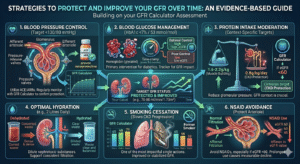
If your GFR Calculator result shows declining kidney function, these evidence-based strategies offer the most powerful protection:
Blood Pressure Control: Target blood pressure below 130/80 mmHg — ideally using ACE inhibitors or ARBs for patients with proteinuria, as these drugs have proven renoprotective effects beyond blood pressure reduction alone. Regular GFR Calculator monitoring confirms whether blood pressure control is successfully slowing filtration decline.
Blood Glucose Management: For diabetic patients, HbA1c control below 7% (53 mmol/mol) is the primary intervention for preserving kidney function. Calculator monitoring every 3 to 6 months tracks the renal impact of glycaemic control strategies.
Protein Intake Moderation: Excessive dietary protein increases glomerular pressure (hyperfiltration) and accelerates nephron loss in established CKD. A protein intake of 0.8g/kg/day is typically recommended for non-dialysis CKD patients — lower than the 1.6 to 2.2g/kg often recommended for muscle building, highlighting the importance of context when setting protein targets for individuals with impaired GFR Calculator results.
Hydration: Chronic dehydration concentrates waste products in the blood and forces the kidneys to work harder to maintain osmotic balance. Adequate hydration (approximately 2 litres of water daily for most adults in temperate climates) supports optimal filtration and reduces the concentration of nephrotoxic substances in renal tubules.
Smoking Cessation: Stopping smoking is one of the most impactful single actions for slowing CKD progression. GFR Calculator results consistently improve or stabilise more favourably in former smokers compared to current smokers at equivalent baseline eGFR.
NSAIDs Avoidance: Regular NSAID use constricts the afferent arteriole of the glomerulus, reducing filtration pressure and causing measurable eGFR decline with prolonged use. Patients with Calculator scores below 60 should generally avoid NSAIDs entirely and discuss alternative pain management with their healthcare provider.
When to See a Nephrologist Based on Your GFR Calculator Results
Our GFR Calculator results map to specific clinical action thresholds:
eGFR below 60 (System Health Alert): Most kidney care guidelines recommend nephrology referral at this threshold. A GFR Calculator result below 60 should prompt a conversation with your primary care provider about specialist referral, particularly if the decline has been progressive or occurred over a short period.
eGFR below 45 (Risk Index Critical): Urgent nephrology referral. A Calculator result in this range represents significant kidney disease with high cardiovascular risk, multiple CKD complications, and the beginning of the preparation timeline for potential renal replacement therapy.
Rapid eGFR decline: A fall of more than 5 ml/min/1.73m² per year constitutes rapid progression. Track your GFR Calculator results over time — if serial measurements show a consistent decline greater than this rate, seek specialist assessment regardless of the absolute eGFR value.
eGFR below 15 (Stage 5 — Kidney Failure): Immediate nephrology involvement is required. A Calculator result below 15 is a medical emergency if accompanied by symptoms of uraemia (nausea, vomiting, confusion, decreased urine output) and requires hospital-level assessment and likely initiation of renal replacement therapy.
Frequently Asked Questions (FAQs)
What is a GFR Calculator? A GFR Calculator is a clinical tool that estimates glomerular filtration rate — the volume of blood your kidneys filter per minute — using serum creatinine, age, gender, weight, and height. It provides an eGFR value used for kidney function assessment and CKD staging.
What is a normal GFR Calculator result? A normal GFR Calculator result for healthy adults is approximately 90 to 120 ml/min/1.73m². Values persistently below 60 indicate chronic kidney disease; below 15 indicates kidney failure.
How accurate is the GFR Calculator? The Cockcroft-Gault formula used in our adult GFR Calculator typically estimates true GFR within 15% to 30% for most patients. Accuracy is reduced in extremes of body weight, muscle mass, and rapidly changing creatinine levels. Complementary testing (Cystatin C, 24-hour urine creatinine clearance) improves accuracy in borderline or complex cases.
Do I need a blood test to use the GFR Calculator? Yes. The GFR Calculator requires a serum creatinine value from a blood test. This is a standard component of a comprehensive metabolic panel or basic metabolic panel — typically ordered as part of routine health screening.
What does eGFR stand for in the GFR Calculator? eGFR stands for estimated Glomerular Filtration Rate — the “estimated” prefix distinguishes formula-derived values (from the GFR Calculator) from directly measured GFR, which requires inulin clearance or radioisotope testing.
Can the GFR Calculator be used to diagnose CKD? The GFR Calculator result contributes to CKD staging but alone cannot diagnose CKD. CKD requires two abnormal eGFR readings or kidney damage markers (proteinuria, structural abnormality) separated by at least three months. Clinical diagnosis requires professional medical interpretation.
What factors lower GFR Calculator results? Dehydration, high protein intake before testing, intense recent exercise, certain medications (NSAIDs, ACE inhibitors in high doses), and acute illness can transiently lower GFR Calculator results. Persistent reduction across multiple tests suggests genuine kidney function impairment.
Can children use the GFR Calculator? Yes — our GFR Calculator includes a dedicated pediatric module using the Schwartz formula, with additional inputs for Cystatin C and BUN. Normal eGFR in children over age 2 is ≥ 90 ml/min/1.73m², similar to adults.
How often should I use the GFR Calculator? For stable, healthy individuals: annually as part of routine health monitoring. For CKD Stage 1 to 2: annually or bi-annually. For CKD Stage 3: every 3 to 6 months. For CKD Stage 4: every 1 to 3 months. Regular Calculator tracking catches progression early when intervention is most effective.
Is the GFR Calculator different for males and females? The adult Calculator applies a 0.742 gender correction factor for females, reflecting lower average muscle mass and creatinine production in women. Without this correction, the formula would systematically overestimate eGFR in women.
Conclusion
Your kidneys work silently and without complaint — filtering, balancing, and protecting your body every minute of every day. CKD affects more than 10% of the global adult population, and the majority of those affected do not know it until kidney function has already declined substantially — because the kidneys have extraordinary reserve capacity that masks early damage. The GFR Calculator is the tool that sees through that reserve, detecting declining filtration before symptoms appear, staging disease with clinical precision, and providing the monitoring framework that makes early intervention possible.
Our free Calculator delivers two complete clinical assessments — adult Cockcroft-Gault and pediatric Schwartz — each producing eight result points and a reference staging table, supporting both mg/dL and µmol/L creatinine input, and providing the full clinical picture from eGFR and creatinine clearance through body surface area, renal load, tubular flow, system health, risk index, and CKD stage mapping.
Whether you are a patient monitoring a known kidney condition, a caregiver tracking a family member’s renal health, a clinician needing a rapid bedside eGFR estimate, or a health-conscious adult incorporating kidney function into annual screening — our Calculator provides the precise, validated, comprehensive kidney function assessment that every informed health decision about renal disease requires.
Use our GFR Calculator today. Know your eGFR. Understand your kidney function. Act on what you learn — because with kidney health, early action is everything.