Result
Results will appear here...
Use our tip calculator to quickly calculate tips and split bills with accuracy
Table of Contents
1. Introduction
2.What is a Sleep Calculator?
3.How Does a Sleep Cycle Calculator Work?
4.Understanding Sleep Cycle Length
5.Why Use a Sleep Calculator?
6.How to Use a Sleep Calculator Effectively
7.Understanding Sleep Cycles
8.Tips for Better Sleep
9.Who Can Benefit from a Sleep Calculator?
10.Popular Sleep Calculator Tools Online
11. Recommended Sleep by Age
12. How 90-Minute Sleep Cycles Work
13.Frequently Asked Questions
14. Conclusion
Introduction
Getting enough high-quality sleep is just as important as eating a healthy diet and exercising regularly. A Sleep Calculator is a smart online tool designed to help you determine the best bedtime or ideal wake-up time based on your natural sleep cycles. Instead of simply aiming for 8 hours of sleep, it helps you wake up at the end of a complete sleep cycle, making you feel more refreshed, energized, and alert.
A Sleep Calculator works by estimating your sleep schedule using the average 90-minute sleep cycle. By entering the time you want to wake up—or the time you plan to go to bed—the calculator suggests the most suitable times to sleep or wake up. This makes it easier to build a healthy sleep routine and improve your overall sleep quality.
Whether you’re a student, working professional, parent, shift worker, or simply looking to improve your nightly rest, a Sleep Calculator can help you plan your sleep more effectively. It removes the guesswork from bedtime planning and supports better physical health, mental well-being, focus, and daily productivity.
In this guide, you’ll learn how a Sleep Calculator works, why it is useful, how to use it correctly, and practical tips to help you develop healthier sleeping habits for a more productive and refreshed life.
What is a Sleep Calculator?
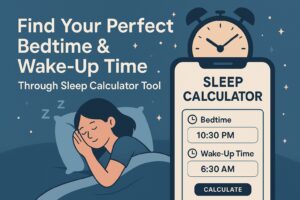
A Sleep Calculator is an online tool that helps you determine the best time to go to bed or wake up. It takes into account the typical sleep cycle duration, usually 90 minutes, and your time to fall asleep. By aligning your sleep schedule with natural REM and NREM cycles, a Sleep Cycle Calculator ensures you wake up feeling refreshed rather than groggy.
Popular tools include the Bedtime Calculator and Wake-Up Time Calculator, which allow you to plan your sleep schedule efficiently. Using a Sleep Calculator regularly can help you maintain better circadian rhythm and overall health.
How Does a Sleep Cycle Calculator Work?
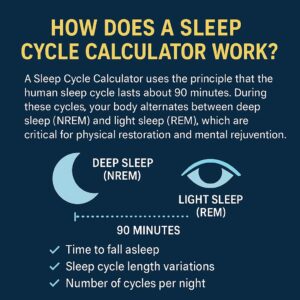
A Sleep Cycle Calculator uses the principle that the human sleep cycle lasts about 90 minutes. During these cycles, your body alternates between deep sleep (NREM) and light sleep (REM), which are critical for physical restoration and mental rejuvenation.
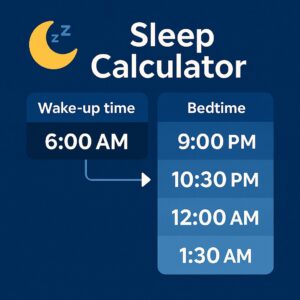
By calculating multiples of 90 minutes from your desired wake-up time, a Bedtime Calculator can suggest the most optimal times to fall asleep. Similarly, if you know your bedtime, a Wake-Up Time Calculator can determine when you should wake up to feel refreshed.
Most Sleep Calculators also include parameters like:
Time to fall asleep
Sleep cycle length variations
Number of cycles per night

Understanding Sleep Cycle Length
The sleep cycle length refers to the duration of one complete cycle of sleep, which typically lasts about 90 minutes in adults. Each cycle includes both NREM (Non-Rapid Eye Movement) and REM (Rapid Eye Movement) stages, which are essential for physical restoration, memory consolidation, and overall mental well-being. Some individuals may experience slightly shorter or longer cycles, ranging from 80 to 110 minutes, depending on factors like age, lifestyle, and health.
Knowing your sleep cycle length is crucial when using a Sleep Cycle Calculator or Bedtime Calculator, as it helps determine the most optimal times to fall asleep or wake up, ensuring you complete full cycles and wake up feeling refreshed. Regularly aligning your sleep schedule with your natural sleep cycle length can improve energy levels, focus, and overall sleep quality.
Why Use a Sleep Calculator?
Using a Sleep Calculator provides several benefits:
Wake Up Refreshed: By following the recommended bedtime from a Sleep Cycle Calculator, you wake up at the end of a sleep cycle, reducing morning grogginess.
Improve Sleep Quality: Consistent use of a Sleep Calculator helps maintain healthy sleep cycles, enhancing REM sleep and overall restfulness.
Optimize Productivity: A well-planned sleep schedule boosts energy, focus, and cognitive function during the day.
Prevent Sleep Disorders: Regular use of sleep calculators can reduce risks of insomnia and other sleep-related issues.
Adapt to Lifestyle Needs: Whether you’re a student, professional, or parent, a Bedtime Calculator helps tailor your sleep schedule according to your daily routine.
How to Use a Sleep Calculator Effectively
Using a Sleep Calculator is simple. Here’s a step-by-step guide:
Choose Your Goal: Decide whether you want to calculate wake-up time or bedtime. Use a Wake-Up Time Calculator if you know your bedtime, or a Bedtime Calculator if you know your wake-up time.
Enter Time to Fall Asleep: Most adults take about 15 minutes to fall asleep. Adjust this in the calculator for better accuracy.
Set Sleep Cycle Length: The standard sleep cycle is 90 minutes, but some people may have 80-110 minute cycles. Use a Sleep Cycle Calculator that allows customization.
Calculate: Press the calculate button to get your ideal bedtime or wake-up times. You’ll typically get multiple options for 5–6 sleep cycles.
Follow the Recommendation: Pick a time that suits your lifestyle and try to maintain consistency.
Understanding Sleep Cycles
Sleep is divided into two major phases: NREM (Non-Rapid Eye Movement) and REM (Rapid Eye Movement). Each sleep cycle consists of:
Stage 1 (NREM): Light sleep, transition between wakefulness and sleep.
Stage 2 (NREM): Slightly deeper sleep, body temperature drops, and heart rate slows.
Stage 3 (NREM): Deep restorative sleep for body repair and growth.
REM Sleep: Brain activity increases, dreams occur, and memory consolidation happens.
By using a Sleep Cycle Calculator, you ensure your wake-up time coincides with REM or light sleep stages, reducing grogginess.
Tips for Better Sleep
Even with a Sleep Calculator, following sleep hygiene practices is crucial:
Maintain a consistent schedule: Go to bed and wake up at the same time daily.
Avoid screens before bed: Reduce exposure to blue light from phones and laptops.
Create a relaxing bedtime routine: Meditation, reading, or listening to calm music.
Control your sleep environment: Keep the bedroom dark, quiet, and cool.
Limit caffeine and heavy meals: Especially 3–4 hours before sleep.
Who Can Benefit from a Sleep Calculator?
Adults: Optimize work performance, reduce stress, and improve mental health.
Students: Plan study schedules around proper sleep cycles.
Parents: Manage children’s sleep routines effectively.
Shift workers: Align sleep with irregular schedules.
Anyone struggling with insomnia: Use a Sleep Calculator to find ideal sleep windows.
Popular Sleep Calculator Tools Online
Here are some of the commonly used tools:
Bedtime Calculator – Helps determine when to go to bed based on wake-up time.
Wake-Up Time Calculator – Suggests the best time to wake up based on your bedtime.
Sleep Cycle Calculator – Considers REM and NREM stages to optimize sleep quality.
Circadian Rhythm Calculator – Aligns your sleep with natural body clocks.
Kids Sleep Calculator – Helps parents manage children’s sleep patterns.
Recommended Sleep by Age
Use these general sleep-duration guidelines alongside the calculator. Individual needs can vary.
| Age Group | Recommended Sleep | Approximate 90-Minute Cycles |
|---|---|---|
| Teens (13–17 years) | 8–10 hours | About 5–7 cycles |
| Adults (18–60 years) | At least 7 hours; often 7–9 | About 5–6 cycles |
| Older adults (61–64 years) | 7–9 hours | About 5–6 cycles |
| Older adults (65+ years) | 7–8 hours | About 5 cycles |
How 90-Minute Sleep Cycles Work
A sleep cycle is a repeating pattern of light sleep, deep sleep, and REM sleep. A cycle is often estimated at about 90 minutes, although real cycles can be shorter or longer and may change during the night.
- Choose your schedule: Select whether you want to calculate a bedtime from your wake-up time or a wake-up time from your bedtime.
- Allow time to fall asleep: The calculator uses 15 minutes by default, but you can change the “Fall” value to match your usual sleep time.
- Count complete cycles: Add or subtract 90 minutes for each cycle. Most adults can plan around 5–6 cycles, but the right amount depends on age and individual sleep needs.
- Keep a consistent routine: A regular sleep and wake time, enough total sleep, and good sleep quality are more important than hitting an exact 90-minute number.
Example: If you need to wake at 7:00 AM and take 15 minutes to fall asleep, five 90-minute cycles suggest getting into bed around 11:15 PM.
Frequently Asked Questions
Q1: How accurate is a Sleep Calculator?
A Sleep Calculator provides an estimate based on average sleep cycles. Individual differences exist, so use it as a guideline rather than an absolute rule.
Q2: Can I adjust sleep cycle length?
Yes. Most Sleep Cycle Calculators allow adjusting cycles between 80–110 minutes for personal accuracy.
Q3: How often should I use a Sleep Calculator?
Use it whenever your schedule changes. For consistent sleep, try to stick to the recommended times.
Q4: Can I use a Sleep Calculator for children?
Absolutely. Specialized calculators like Kids Sleep Calculator help determine optimal bedtimes for toddlers and school-age children.
Q5: Do night-shift workers also follow 90-minute sleep cycles?
Yes, sleep cycles still occur during daytime sleep, but light, noise, and a changing schedule can make daytime rest harder. Night-shift workers should aim for a consistent sleep window, a dark quiet room, and enough total sleep for their age.
Q6: Is going to sleep late harmful if I complete five or six cycles?
Completing an estimated number of cycles does not guarantee restorative sleep. Total sleep time, sleep quality, and a stable body-clock schedule also matter. Try to keep bedtime and wake-up time consistent whenever possible.
Q7: Why am I still tired after completing six sleep cycles?
The 90-minute figure is only an average, and tiredness can result from irregular sleep, stress, poor sleep quality, illness, or another health issue. If tiredness continues despite enough sleep, speak with a healthcare professional.
This sleep calculator provides general planning estimates and is not medical advice.
Conclusion
Using a Sleep Calculator, Bedtime Calculator, or Wake-Up Time Calculator is a simple yet effective way to improve sleep quality. By understanding your sleep cycles and planning your schedule, you can wake up refreshed, enhance productivity, and maintain overall well-being.
Whether you are an adult, student, or parent, integrating a Sleep Calculator into your routine is a step toward better sleep hygiene and healthier life.
Start using a Sleep Calculator today to find your ideal bedtime and wake-up time—because better sleep means better life.