Budget Calculator
Estimate Your Lease Cost in One Click Lease Calculator
Table of Contents
- Introduction
- What Is a Budget Calculator?
- Why Budget Planning Matters
- How a Budget Calculator Works
- Key Features of a Modern Budget Calculator
- Benefits of Using a Budget Calculator
- Monthly Income Management
- Tracking Fixed Expenses
- Managing Variable Expenses
- Budget Calculator for Savings Goals
- Emergency Fund Planning
- Debt Reduction Strategies
- Budget Calculator for Families
- Business Budget Planning
- Budget Calculator for Students
- Common Budgeting Mistakes
- Tips to Improve Financial Stability
- Importance of Expense Tracking
- Digital Budgeting Tools and Automation
FAQs
- Conclusion
Introduction
Managing finances properly has become more important than ever in today’s economy. A professional budget calculator helps individuals, families, students, and businesses track income, expenses, savings, and financial goals with accuracy. Instead of relying on rough estimates, users can calculate their monthly spending patterns and create better financial strategies using a modern budgeting tool.
A reliable budget calculator simplifies financial planning by organizing income and expenses into structured categories. Whether someone wants to reduce debt, increase savings, or improve money management habits, this type of calculator provides valuable insights for long-term stability.
Smart budgeting creates financial confidence and reduces unnecessary stress. That is why digital budgeting tools are becoming essential for modern financial planning.
Managing money properly has become one of the most important skills in modern life. With rising living costs, increasing monthly bills, and changing financial responsibilities, people often struggle to maintain control over their spending habits. Whether someone is handling personal expenses, family finances, business operations, or long-term savings goals, having a clear financial structure is essential for stability and peace of mind. Without proper financial planning, even a strong income can become difficult to manage effectively.
Many individuals spend money daily without fully understanding where their income is going. Small expenses such as subscriptions, dining out, transportation, shopping, and utility costs may appear manageable at first, but over time they can create financial pressure. This is why organized financial tracking has become increasingly valuable for people who want to reduce unnecessary spending and improve money management habits. Understanding income and expenses is the foundation of strong financial discipline.
Modern digital financial tools have completely transformed the way people organize and monitor their finances. Instead of manually calculating expenses using notebooks or spreadsheets, users can now access automated systems that instantly generate financial summaries and spending insights. These tools simplify complex calculations and help individuals make smarter financial decisions in less time. Automation improves accuracy, saves effort, and provides better financial visibility.
Financial planning is not only about reducing expenses. It also involves setting realistic goals for the future. People often want to save money for emergencies, education, vacations, investments, vehicle purchases, or home ownership. Proper planning makes these goals more achievable by creating a clear structure for saving and spending. When financial decisions are based on accurate calculations instead of assumptions, long-term stability becomes easier to achieve. Consistent financial awareness creates stronger financial confidence over time.
Businesses and families also benefit significantly from organized financial management. Companies need accurate expense forecasting to maintain profitability and operational efficiency, while households require balanced spending to manage everyday responsibilities successfully. Tracking financial activity regularly helps prevent overspending, reduces stress, and improves long-term financial security. Careful financial organization leads to smarter decision-making and better financial outcomes.
In today’s fast-moving economy, managing money wisely is no longer optional. It has become a necessary part of achieving financial freedom, reducing uncertainty, and building a more secure future. Proper financial planning helps individuals stay prepared for both expected and unexpected expenses while maintaining healthier financial habits for years to come.
What Is a Budget Calculator?
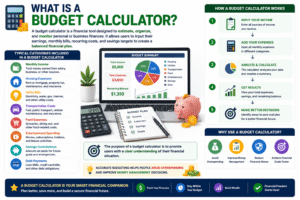
A budget calculator is a financial tool designed to estimate, organize, and monitor personal or business finances. It allows users to input their earnings, monthly bills, recurring costs, and savings targets to create a balanced financial plan.
Typical categories included in a budget calculator are:
- Monthly income
- Housing expenses
- Utility bills
- Transportation costs
- Food expenses
- Entertainment spending
- Savings contributions
- Debt payments
The purpose of a budget calculator is to provide users with a clear understanding of their financial situation.
Accurate budgeting helps people avoid overspending and improve money management decisions.
Why Budget Planning Matters
Financial planning is essential for achieving long-term stability and avoiding unnecessary debt.
A professional budget calculator helps users:
- Monitor spending habits
- Control unnecessary expenses
- Improve savings strategies
- Prepare for emergencies
- Reduce financial stress
Without proper budgeting, many individuals struggle to manage monthly obligations efficiently.
Financial discipline begins with understanding where money is being spent.
How a Budget Calculator Works
A modern budget calculator works by collecting financial information from users and processing it into organized expense summaries.
The calculator typically analyzes:
| Budget Category | Purpose |
|---|---|
| Income | Monthly earnings |
| Housing Costs | Rent or mortgage payments |
| Utilities | Electricity, water, internet |
| Transportation | Fuel and travel costs |
| Savings | Emergency or investment funds |
After processing these values, the budget calculator generates a financial overview showing spending patterns and remaining balances.
This automated process improves budgeting accuracy and saves valuable time.
Key Features of a Modern Budget Calculator
A professional budget calculator should include advanced features that improve financial tracking and usability.
Important Features
- Real-time expense calculations
- Monthly income tracking
- Savings goal management
- Debt monitoring
- Mobile-friendly responsiveness
- Expense categorization
- Financial reporting summaries
These features make budgeting tools more effective for personal and business financial planning.
Benefits of Using a Budget Calculator
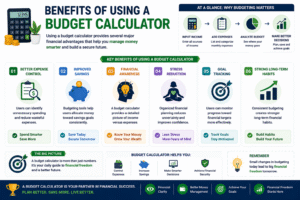
Using a budget calculator provides several major financial advantages.
Better Expense Control
Users can identify unnecessary spending and reduce wasteful expenses.
Improved Savings
Budgeting tools help users allocate money toward savings goals consistently.
Financial Awareness
A budget calculator provides a detailed picture of income versus expenses.
Stress Reduction
Organized financial planning reduces uncertainty and improves confidence.
Goal Tracking
Users can monitor progress toward financial targets more effectively.
Consistent budgeting creates stronger long-term financial habits.
Monthly Income Management
Managing monthly income correctly is one of the most important aspects of financial planning.
A reliable budget calculator helps users organize:
- Primary salary income
- Freelance earnings
- Business revenue
- Investment income
- Passive income streams
Understanding total income allows individuals to create realistic spending plans.
Income tracking improves financial stability and long-term planning.
Tracking Fixed Expenses
Fixed expenses are recurring monthly costs that usually remain consistent.
Examples include:
- Rent or mortgage
- Insurance premiums
- Loan payments
- Internet services
- Subscription plans
A professional budget calculator helps users monitor these recurring obligations efficiently.
Tracking fixed expenses prevents budgeting errors and overspending.
Managing Variable Expenses
Variable expenses fluctuate from month to month and often create budgeting challenges.
Common variable expenses include:
- Groceries
- Dining out
- Entertainment
- Fuel costs
- Shopping expenses
A modern budget calculator helps users identify spending trends and adjust financial habits accordingly.
Controlling variable spending improves monthly cash flow management.
Budget Calculator for Savings Goals
Saving money consistently requires planning and discipline.
A powerful budget calculator helps users create savings strategies for:
- Emergency funds
- Vacation planning
- Home purchases
- Vehicle upgrades
- Investment contributions
Financial tools improve savings consistency by showing how much money can be safely allocated each month.
Small monthly savings can create significant long-term financial security.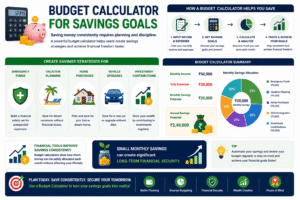
Emergency Fund Planning
Unexpected financial emergencies can occur at any time.
A professional budget calculator helps users prepare for:
- Medical emergencies
- Job loss
- Vehicle repairs
- Home maintenance
- Unexpected bills
Experts often recommend saving three to six months of living expenses.
Emergency savings improve financial confidence during uncertain situations.
Debt Reduction Strategies
Debt management is a critical part of financial planning.
A modern budget calculator allows users to track:
- Credit card balances
- Student loans
- Personal loans
- Auto financing
- Mortgage payments
Users can create repayment strategies by analyzing monthly cash flow and expense reductions.
Effective budgeting accelerates debt repayment and improves financial health.
Budget Calculator for Families
Families often manage multiple income sources and shared expenses simultaneously.
A family-focused budget calculator helps organize:
- Household expenses
- Childcare costs
- Education spending
- Healthcare expenses
- Family savings goals
Financial organization becomes easier when all expenses are categorized properly.
Family budgeting improves financial communication and long-term planning.
Business Budget Planning
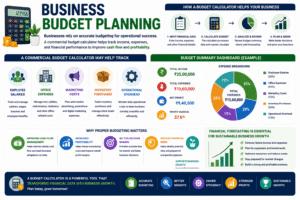
Businesses rely on accurate budgeting for operational success.
A commercial budget calculator may help track:
- Employee salaries
- Office expenses
- Marketing costs
- Inventory purchases
- Operational overhead
Proper budgeting improves cash flow management and business profitability.
Financial forecasting is essential for sustainable business growth.
Budget Calculator for Students
Students often face limited income and increasing educational expenses.
A student-friendly budget calculator helps manage:
- Tuition costs
- Accommodation expenses
- Books and supplies
- Transportation
- Food budgets
Good budgeting habits developed during student life can improve long-term financial success.
Common Budgeting Mistakes
Many people struggle financially because of avoidable budgeting mistakes.
Common Errors Include
- Ignoring small expenses
- Overspending on entertainment
- Not tracking subscriptions
- Failing to save consistently
- Underestimating monthly costs
A professional budget calculator helps users identify these financial problems early.
Awareness is the first step toward improving financial habits.
Tips to Improve Financial Stability
Building strong financial habits requires consistency and planning.
Useful Budgeting Tips
- Track all monthly expenses
- Reduce unnecessary subscriptions
- Set realistic savings goals
- Avoid impulse spending
- Review finances regularly
A powerful budget calculator makes implementing these strategies much easier.
Importance of Expense Tracking
Expense tracking helps users understand where money is going every month.
A modern budget calculator provides visibility into:
- Spending patterns
- Financial priorities
- Cash flow management
- Savings opportunities
Tracking expenses regularly improves financial discipline and accountability.
Digital Budgeting Tools and Automation
Technology has transformed modern budgeting practices.
An advanced budget calculator may include:
- Automated expense tracking
- Mobile synchronization
- Cloud-based storage
- Real-time financial updates
- Detailed financial reporting
Digital tools improve convenience and reduce manual calculation errors.
Automation makes budgeting faster, easier, and more accurate.
Frequently Asked Questions
What is the purpose of a financial planning tool?
A financial planning tool helps users organize income, expenses, savings, and spending habits in one place. It provides a clearer understanding of monthly cash flow and improves money management decisions.
How can expense tracking improve financial stability?
Expense tracking helps identify unnecessary spending patterns and allows users to make smarter financial adjustments. Regular monitoring creates better spending discipline and stronger savings habits.
Why is monthly budgeting important?
Monthly budgeting helps people control spending, avoid debt, and maintain financial balance. It also improves planning for future goals and unexpected emergencies.
Can financial tools help reduce debt faster?
Yes, organized financial management helps users allocate more money toward debt repayment while controlling unnecessary expenses. Better planning often leads to faster debt reduction.
How often should financial records be reviewed?
Financial records should ideally be reviewed every month. Regular reviews help users stay aware of spending changes and maintain better control over their finances.
What are the most common financial planning mistakes?
Some common mistakes include:
- Ignoring small daily expenses
- Overspending on non-essential items
- Failing to save consistently
- Not tracking recurring payments
- Avoiding long-term financial planning
Why is saving money important for emergencies?
Emergency savings provide financial protection during unexpected situations such as medical expenses, job loss, or urgent repairs. A strong emergency fund reduces financial stress significantly.
How can families improve household financial management?
Families can improve financial management by tracking expenses together, setting savings goals, reducing unnecessary spending, and reviewing financial priorities regularly.
What is the benefit of automated financial tools?
Automated systems improve calculation accuracy, reduce manual work, and provide faster financial insights. They make money management simpler and more efficient.
How can better financial habits improve long-term stability?
Consistent financial discipline helps individuals build savings, reduce debt, improve spending awareness, and create a more secure future over time.
Conclusion
A professional budget calculator is an essential financial tool for individuals, families, students, and businesses looking to improve money management. It simplifies budgeting, organizes expenses, tracks savings goals, and provides valuable financial insights for long-term stability.
By understanding spending habits, monitoring monthly obligations, and creating realistic savings strategies, users can make smarter financial decisions with greater confidence. Whether managing personal finances or business operations, a reliable budgeting tool helps create stronger financial discipline and improved financial security.
Consistent budgeting leads to better financial control, reduced stress, and long-term financial success.
Proper financial management plays a major role in achieving long-term stability and reducing unnecessary stress. By carefully tracking income, expenses, savings, and financial goals, individuals can make smarter decisions and improve overall money management habits. Organized financial planning helps prevent overspending, supports emergency preparedness, and creates better control over daily expenses. Modern digital tools simplify complex calculations and provide greater financial visibility for both personal and business use. Consistent financial awareness leads to stronger budgeting habits, improved savings strategies, and greater financial confidence over time. Smart planning today creates a more secure and financially balanced future tomorrow.